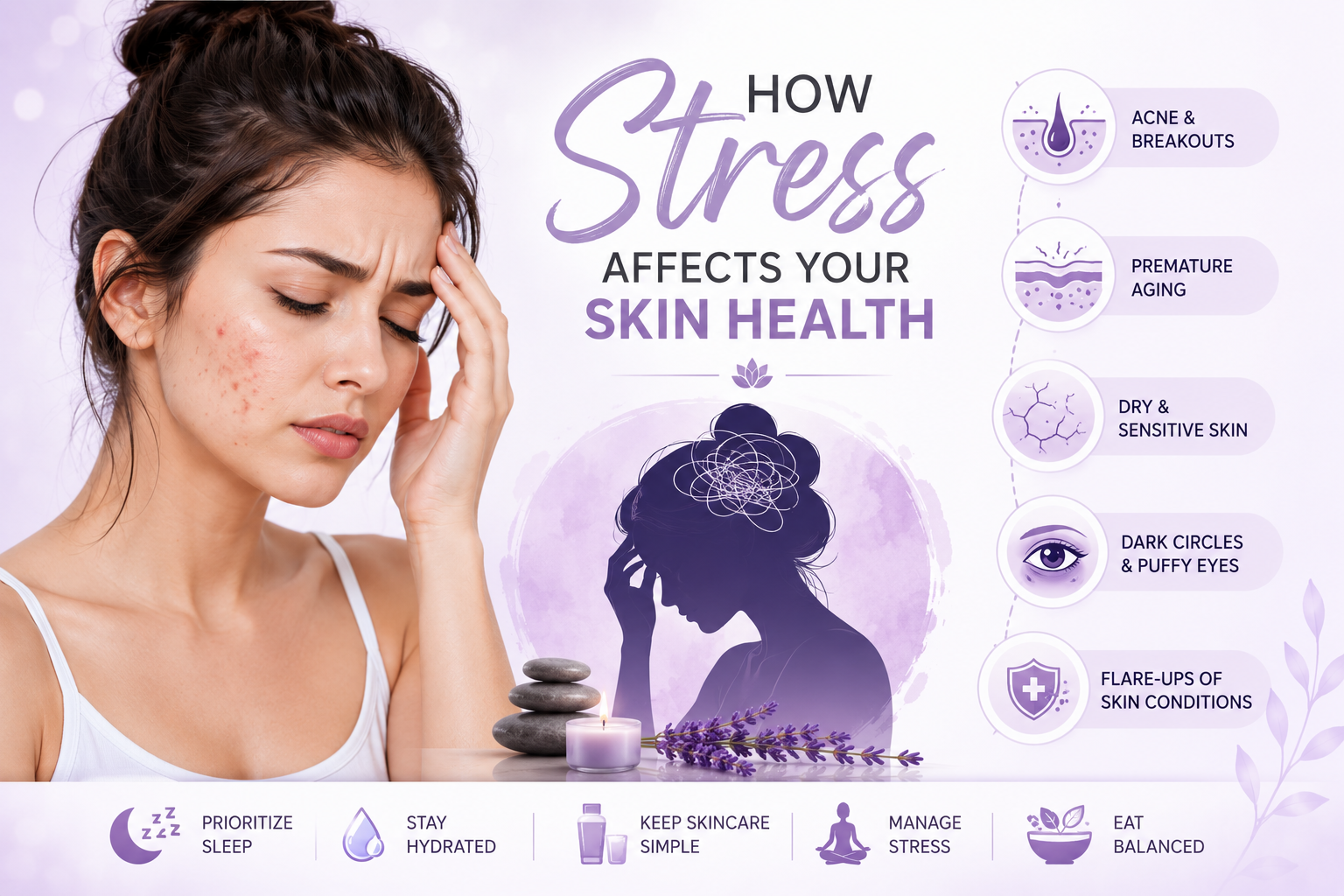
Ever noticed a breakout before an important meeting or your skin looking dull during stressful weeks? That’s because stress doesn’t just affect your mind. It affects your skin too.
From acne and dryness to sensitivity and early aging, ongoing stress can change how your skin looks and feels over time.
What Happens to Your Skin During Stress?
When you’re stressed, your body releases cortisol, often called the stress hormone. Higher cortisol levels can increase oil production, trigger inflammation, and make your skin more sensitive.
Stress can also weaken your skin barrier, the protective layer that helps keep moisture in and irritants out. When this barrier is compromised, your skin may struggle to:
- Retain moisture
- Protect against pollution and bacteria
- Repair itself properly
As a result, your skin may appear dull, dry, irritated, or uneven.
Common Skin Problems Linked to Stress
Acne and Breakouts
Stress can increase oil production, which may clog pores and trigger breakouts.
Premature Aging
Long-term stress may contribute to collagen breakdown, leading to fine lines and reduced elasticity.
Dry and Sensitive Skin
A weakened skin barrier can leave skin feeling dry, itchy, or more reactive.
Dark Circles and Puffy Eyes
Stress often affects sleep, which can quickly show up as tired-looking skin.
Flare-Ups of Existing Skin Conditions
Stress may worsen conditions like:
- Eczema
- Psoriasis
- Rosacea
- Sensitive skin reactions
How to Protect Your Skin From Stress
You can’t always avoid stress, but small habits can reduce its impact:
- Prioritize sleep: Aim for 7–8 hours for better recovery and repair.
- Stay hydrated: Supports moisture balance and skin function.
- Keep skincare simple: Use gentle cleansing, moisturizing, and sunscreen.
- Exercise regularly: Helps lower stress hormones and improve circulation.
- Manage stress: Try meditation, journaling, yoga, or breathing exercises.
- Eat balanced meals: Include fruits, vegetables, healthy fats, and antioxidants.
- Avoid touching your skin: Picking or touching can worsen irritation and breakouts.
Why Stress Management Matters
Healthy skin isn’t only about skincare products. Sleep, stress levels, lifestyle habits, and emotional well-being all play a role.
Managing stress may help improve:
- Skin clarity
- Moisture balance
- Skin barrier strength
- Overall skin appearance
Key Takeaway
Stress can have a significant impact on skin health by influencing oil production, inflammation, skin barrier function, and the skin’s ability to repair itself. While stress cannot always be avoided, maintaining healthy lifestyle habits, managing stress effectively, and following a consistent skincare routine can help support healthier, more resilient skin over time.