You notice a few strands of hair on your pillow. Then a few more in the shower.
Soon, every time you run your fingers through your hair, more hair seems to come out than usual. Sound familiar?
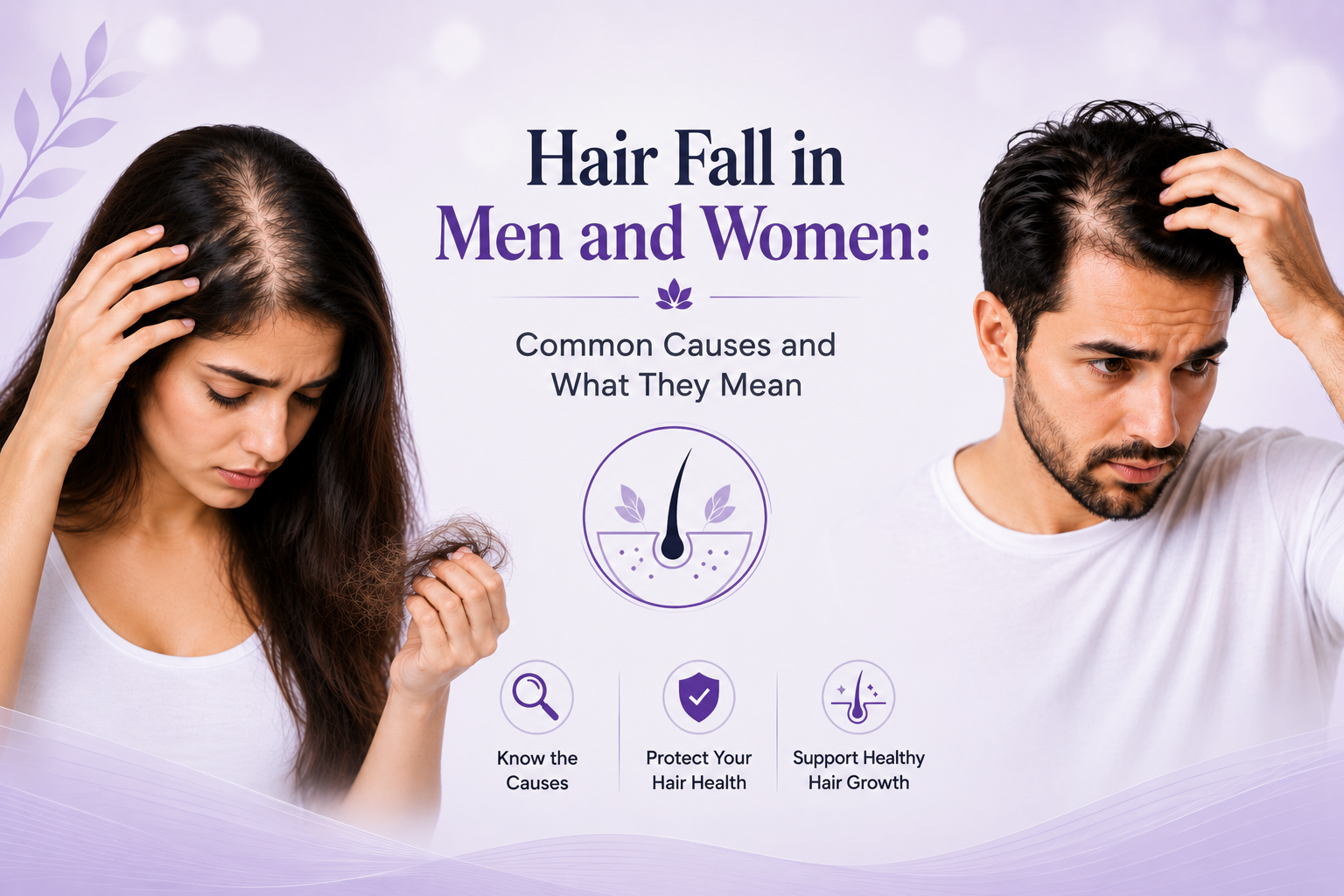
Hair fall is one of the most common concerns affecting both men and women. However, not every strand that falls out is a cause for concern.
Most people naturally lose around 50 to 100 strands of hair daily as part of the normal hair growth cycle. The concern begins when hair shedding becomes excessive, hair density starts reducing or you notice visible thinning.
The challenge is that hair fall can have many different triggers, and the cause is not always obvious. Stress, nutritional deficiencies, hormonal changes, scalp concerns, genetics and certain medical conditions can all influence the hair growth cycle. Understanding the underlying cause is often the first step toward managing hair fall effectively.
What Causes Hair Fall in Men and Women?
Hair fall can result from a combination of internal and external factors. While some causes are temporary, others may gradually affect hair density over time. Here are some of the most common reasons behind excessive hair shedding and thinning.
- Stress and Lifestyle Changes
Physical and emotional stress can disrupt the normal hair growth cycle and trigger excessive shedding.
Common triggers include:
- Lack of sleep
- Work-related stress
- Major life events
- Illness or recovery from illness
- Sudden weight loss
- Emotional distress
Hair fall linked to stress often appears several weeks or even months after the triggering event, making the connection easy to miss.
- Nutritional Deficiencies
Healthy hair growth depends on adequate nutrition.
Low levels of iron, protein, vitamin D, vitamin B12, zinc and other essential nutrients may contribute to increased hair shedding and weaker hair strands.
Many people focus on shampoos, oils and serums while overlooking the role nutrition plays in maintaining healthy hair.
- Hormonal Changes and Imbalances
Hormones play an important role in hair growth. Changes in hormone levels can influence hair density, growth patterns, and shedding.
Women may notice increased hair fall during:
- Pregnancy
- Postpartum recovery
- Perimenopause and menopause
- Hormonal imbalances such as PCOS or PMOS
- Scalp Conditions
A healthy scalp provides the foundation for healthy hair growth.
Conditions that may contribute to hair fall include:
- Dandruff
- Excessive scalp oiliness
- Scalp inflammation
- Fungal infections
- Persistent itching and irritation
When scalp health is compromised, the environment needed for healthy hair growth can also be affected.
- Underlying Medical Conditions
Hair fall can sometimes be a symptom of an underlying health concern.
Some commonly associated conditions include:
- Thyroid disorders
- Iron-deficiency anemia
- Autoimmune conditions
- Chronic illnesses
- Certain medications
This is why identifying the root cause is important rather than focusing only on the symptom.
- Frequent Styling and Chemical Treatments
Repeated exposure to heat and harsh chemical treatments can weaken the hair shaft and increase breakage.
Potential contributors include:
- Frequent hair colouring
- Hair straightening treatments
- Excessive heat styling
- Tight hairstyles
- Chemical processing
Over time, repeated damage can make hair appear thinner and less healthy.
- Seasonal Hair Fall
Many people notice increased hair shedding during seasonal transitions, particularly during monsoon and post-monsoon periods.
Temporary seasonal hair fall is common and often improves on its own. If shedding becomes excessive or continues for an extended period, it may be worth investigating further.
- Genetics and Pattern Hair Loss
Genetics is one of the most common causes of long-term hair thinning in both men and women.
Men may develop a receding hairline or thinning at the crown, often referred to as male pattern hair loss.
Women may notice gradual thinning, reduced hair volume, or widening of the hair partition over time.
Because genetic hair loss typically progresses gradually, early evaluation can help identify suitable management options before significant hair loss occurs.
Signs Your Hair Fall May Need Professional Attention
Occasional hair shedding is normal. However, it may be worth seeking professional guidance if you notice:
- Sudden increase in hair shedding
- Visible thinning of the hair
- Receding hairline
- Bald patches
- Widening of the hair partition
- Persistent scalp irritation
- Hair fall lasting several months
Early evaluation can help identify underlying causes and support timely management.
Depending on the cause and severity of hair loss, treatment options may vary. Individuals experiencing early thinning may benefit from targeted Hair Regrowth Treatments, while those with advanced hair loss or significant bald patches may consider Hair Transplantation as a long-term restoration option. A professional evaluation can help determine the most suitable approach based on your hair loss pattern and scalp health.
Key Takeaway
Hair fall is often a symptom rather than a condition itself. Factors such as stress, nutritional deficiencies, hormonal changes, scalp concerns, genetics, and certain medical conditions can all affect the hair growth cycle. Understanding the underlying cause is one of the most important steps toward managing hair fall effectively and supporting healthier hair over time.
FAQs
How much hair fall is normal in a day?
Most people naturally lose around 50 to 100 strands of hair daily as part of the normal hair growth cycle.
Can stress cause hair fall?
Yes. Physical and emotional stress can disrupt the hair growth cycle and trigger temporary hair shedding, often weeks or months after the stressful event.
Can nutritional deficiencies lead to hair loss?
Yes. Low levels of nutrients such as iron, protein, vitamin D, vitamin B12 and zinc may contribute to excessive hair fall and weaker hair strands.
Why is my hair falling out suddenly?
Sudden hair fall may be linked to stress, illness, nutritional deficiencies, hormonal changes, certain medications, or underlying medical conditions. Identifying the cause is important for appropriate management.
Can PCOS or PMOS cause hair fall?
Yes. Hormonal imbalances associated with PCOS or PMOS can affect the hair growth cycle and contribute to increased shedding or hair thinning in some individuals.
Is seasonal hair fall normal?
Mild seasonal hair shedding is common. However, prolonged or excessive hair fall should be evaluated, especially if it is accompanied by noticeable thinning.
Can scalp problems cause hair fall?
Yes. Conditions such as dandruff, scalp inflammation, fungal infections and excessive oiliness can affect scalp health and contribute to hair fall.