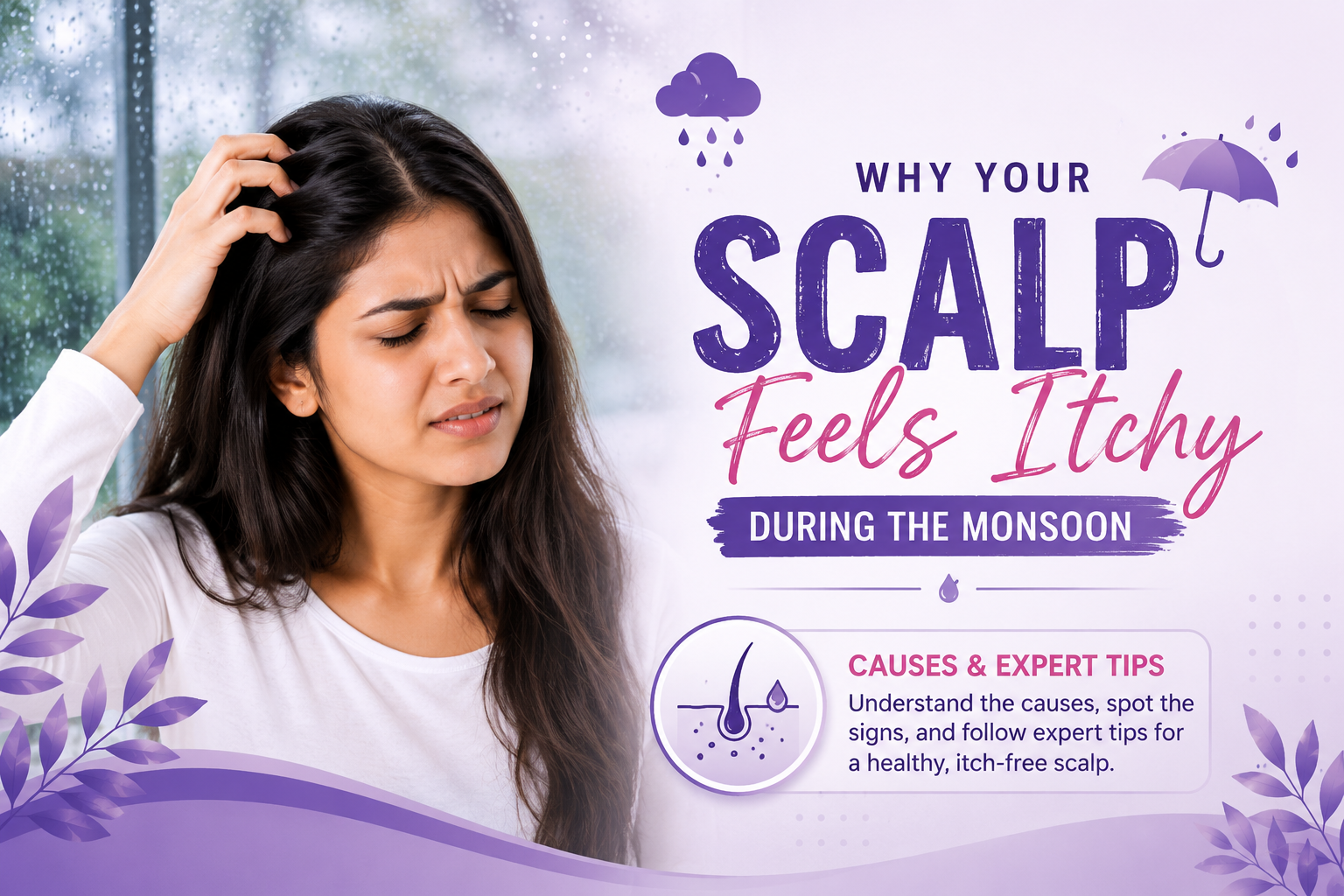
The rainy season brings cooler weather and relief from the summer heat, but it can also bring unexpected changes to your scalp. If you’ve noticed persistent itching, flaking, or irritation, you’re not alone.
During the monsoon, high humidity, sweat, rainwater, and microbial growth can affect your scalp health, leading to itching and discomfort. While occasional itching may seem harmless, ignoring it can lead to discomfort and even affect the health of your hair over time.
Why Does the Scalp Become Itchy During the Monsoon?
Increased Humidity
Monsoon air contains high levels of moisture, causing the scalp to remain damp for longer periods. A moist scalp creates favourable conditions for the growth of fungi and yeast that naturally live on the skin. When these multiply excessively, they can trigger itching, irritation, and dandruff.
Sweat and Oil Build-up
Even though the weather feels cooler, your scalp continues to produce sweat and natural oils. These combine with dust, pollution, and hair products, leading to clogged hair follicles and scalp irritation if not cleansed properly.
Wet Hair for Long Hours
Many people tie up their hair or leave it wet after getting caught in the rain. Staying with a damp scalp for prolonged periods encourages microbial growth, making itching and scalp infections more likely.
Existing Scalp Conditions May Flare Up
Conditions such as dandruff, Scalp inflammation, psoriasis, or eczema often worsen during humid weather. If you already have one of these conditions, you may notice increased itching and visible flakes during the rainy season.
Common Signs You Shouldn’t Ignore
An itchy scalp may be accompanied by other symptoms, including:
- Persistent itching that doesn’t improve
- White or yellowish flakes
- Oily or greasy scalp
- Redness or irritation
- Small bumps or pimples on the scalp
- Increased hair falls due to scratching
If these symptoms continue for several weeks or become severe, it’s advisable to consult a dermatologist for proper evaluation.
What You Can Do to Reduce Scalp Itching
Wash Your Hair Regularly
Keeping your scalp clean helps remove excess oil, sweat, and impurities that build up during humid weather. Choose a shampoo suitable for your scalp type and avoid letting dirt accumulate for several days.
Dry Your Hair Completely
After washing your hair or getting caught in the rain, gently dry your scalp before tying your hair or going to bed. A dry scalp is less likely to develop fungal overgrowth.
Avoid Scratching
Frequent scratching can damage the scalp, increase inflammation, and raise the risk of secondary infections. If the itching persists, treating the underlying cause is more effective than scratching for temporary relief.
Keep Hair Accessories Clean
Hairbrushes, combs, towels, pillowcases, and helmets can collect sweat, oil, and microbes. Cleaning them regularly helps reduce the chances of recurring scalp irritation.
Avoid Heavy Hair Products
Using excessive styling products or thick oils during humid weather can trap dirt and make the scalp feel greasier. Use lightweight products whenever possible and cleanse the scalp thoroughly.
Can Itchy Scalp Lead to Hair Fall?
An itchy scalp itself may not directly cause hair loss. However, the underlying causes such as dandruff, fungal infections, inflammation, or excessive scratching can weaken the scalp environment and contribute to increased hair shedding.
Managing scalp health early helps maintain healthier hair growth and prevents further discomfort.
When Should You See a Dermatologist?
While mild itching may improve with proper scalp care, professional evaluation is recommended if you notice:
- Itching lasting more than two to three weeks
- Severe dandruff despite using anti-dandruff shampoos
- Painful bumps or pus-filled lesions
- Significant hair fall
- Red, inflamed, or scaly patches on the scalp
A dermatologist can identify the exact cause and recommend treatment based on your scalp condition rather than treating symptoms alone.
Key Takeaway
An itchy scalp during the monsoon is often caused by excess humidity, sweat, oil build-up, and increased fungal growth. Maintaining good scalp hygiene, drying your hair thoroughly, and addressing persistent symptoms early can help keep your scalp healthy. If itching, dandruff, or hair fall continues despite proper care, consulting a dermatologist is the best way to identify the underlying cause and receive appropriate treatment.
FAQs
Why does my scalp itch more during the monsoon?
Humidity, sweat, and excess oil create a moist environment that can lead to dandruff, fungal growth, and scalp irritation.
Can rainwater cause an itchy scalp?
Rainwater itself isn’t the main cause, but leaving your scalp wet after getting drenched can increase irritation and microbial growth.
Does an itchy scalp always mean dandruff?
No. Itching can also be caused by fungal infections, product build-up, eczema, psoriasis, or other scalp conditions.
Can scratching an itchy scalp cause hair fall?
Frequent scratching may damage the scalp and contribute to increased hair shedding.
How can I prevent scalp itching during the monsoon?
Keep your scalp clean, dry your hair thoroughly, avoid product build-up, and maintain good scalp hygiene.
When should I see a dermatologist?
If itching persists for more than two weeks or is accompanied by severe flakes, redness, pain, or excessive hair fall.
Is monsoon hair fall normal?
Mild seasonal shedding can occur, but excessive hair fall with persistent scalp problems should be evaluated by a dermatologist.