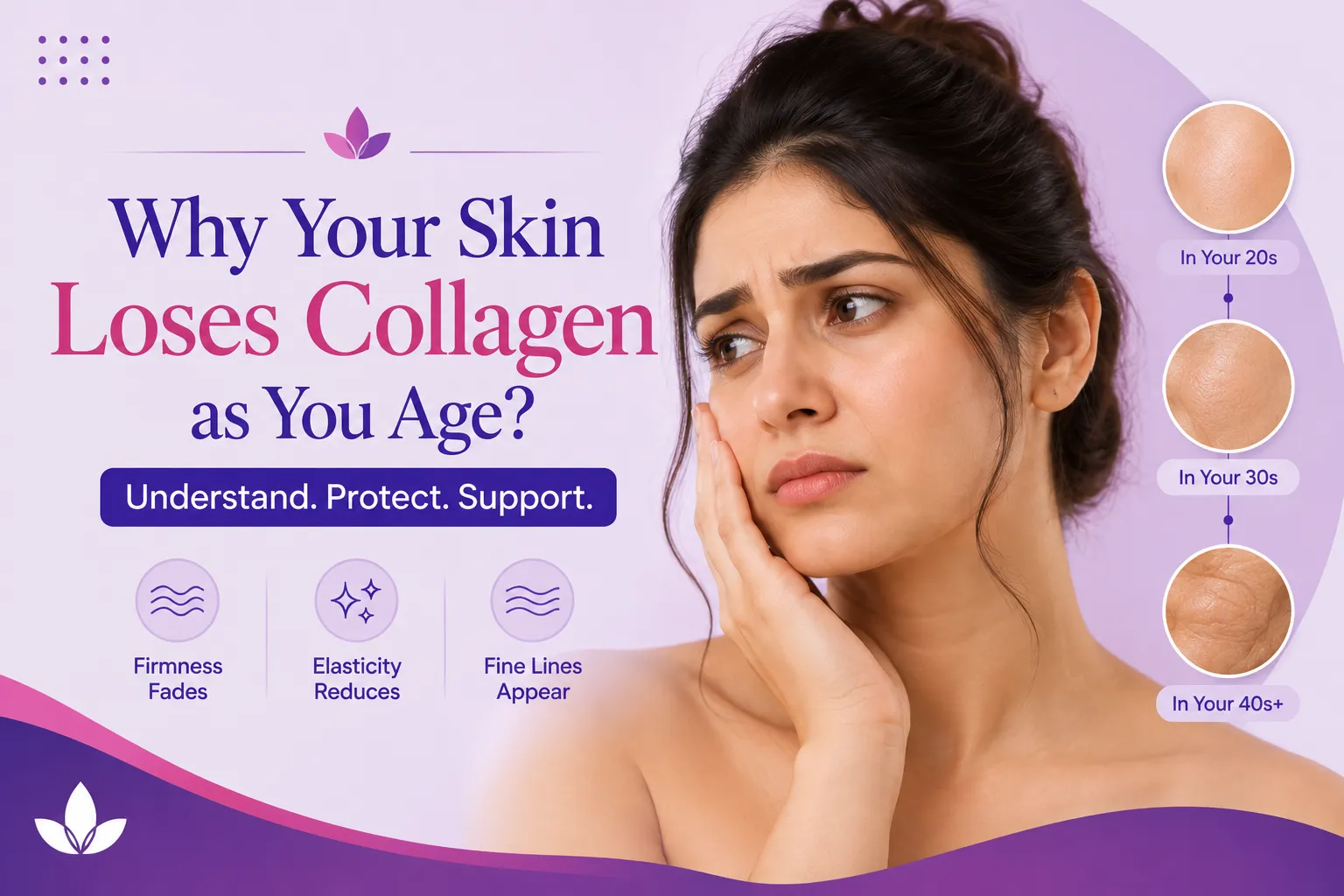
Fine lines, less firmness and changes in skin texture are natural parts of ageing. But have you ever wondered what causes these changes? One important factor is the gradual decline in collagen production.
Collagen is one of the main proteins that gives skin its structure, strength and firmness. When collagen production starts to slow down, the skin gradually loses some of its elasticity and ability to stay firm.
Understanding how collagen changes with age can help you make better choices for maintaining healthy-looking skin.
What Is Collagen and Why Is It Important?
Collagen is a structural protein found throughout the body, including the skin. It provides support and helps maintain the skin’s firmness and structure.
Along with elastin and other components of the skin, collagen contributes to a smooth and resilient appearance.
As we age, the body naturally produces less collagen, and the collagen already present in the skin can also become damaged or fragmented, the skin may gradually lose some of its firmness and elasticity.
Why Does Collagen Production Slow Down With Age?
Ageing is the main reason collagen production gradually declines. This process is influenced by several factors.
Natural Ageing
As we get older, collagen synthesis slows down. The skin may become thinner and less firm, while fine lines become more noticeable.
Sun Exposure
UV radiation can damage collagen fibres and accelerate changes associated with skin ageing. Repeated sun exposure can contribute to wrinkles, uneven texture and loss of firmness.
Oxidative Stress
Free radicals generated by environmental exposure and other factors can contribute to collagen breakdown and cellular damage.
Lifestyle Factors
Smoking, poor nutrition, inadequate sleep and prolonged stress may also affect skin health and contribute to premature signs of ageing.
What Happens When Collagen Levels Decline?
Lower collagen levels can lead to visible changes such as:
- Fine lines and wrinkles
- Reduced skin firmness
- Loss of elasticity
- Changes in skin texture
- Thinner-looking skin
- Increased dryness
These changes happen gradually and can vary from person to person.
Can You Slow Down Collagen Loss?
Ageing cannot be stopped, but certain habits can help protect your skin and support overall skin health.
Protect Your Skin From the Sun
Daily sunscreen is one of the most important steps for protecting collagen from UV-related damage. Choose a broad-spectrum sunscreen and reapply when required.
Maintain a Balanced Diet
A varied diet containing protein, vitamins, minerals and antioxidant-rich foods can support healthy skin and collagen production.
Avoid Smoking
Smoking can damage collagen and elastin and is associated with premature skin ageing. Avoiding smoking can help reduce this source of skin damage.
Get Enough Sleep
Quality sleep supports overall health and the body’s normal repair processes. Maintaining a consistent sleep routine can be part of a healthy lifestyle.
Follow a Consistent Skincare Routine
A simple routine suited to your skin type can help maintain hydration and protect the skin barrier. Certain ingredients, such as retinoids and vitamin C, may also support healthier-looking skin when appropriately used.
Can Treatments Help Improve Collagen?
Yes. Certain dermatological and aesthetic treatments are designed to stimulate collagen production or improve the appearance of skin affected by collagen loss.
Depending on your skin concerns, a dermatologist may recommend treatments such as chemical peels, microneedling, laser procedures, radiofrequency-based treatments, fillers or other skin rejuvenation options.
The most suitable treatment depends on your skin condition, age-related changes and individual goals.
When Should You Consider Professional Advice?
If you are noticing increasing fine lines, loss of firmness, uneven texture or other changes in your skin, a dermatologist can help you understand the possible causes.
Seeking advice is particularly useful if you are considering procedures or are unsure which products and ingredients are suitable for your skin.
The La Piel Approach
At Dr. Trasi’s La Piel Clinic, skin rejuvenation is approached according to your skin condition and individual concerns.
Following a consultation and treatment options may include anti-ageing solutions, chemical peels, fillers and thread lifts, laser procedures or other aesthetic treatments.
The focus is on choosing treatments that suit your skin rather than following a one-size-fits-all approach.
Key Takeaway
Collagen loss and changes in collagen structure are natural parts of ageing, while environmental and lifestyle factors can contribute to premature skin ageing.
Sun protection, a balanced lifestyle and consistent skincare can help support healthy skin and reduce avoidable damage. If fine lines, wrinkles or loss of firmness are becoming a concern, a dermatologist can guide you towards suitable skincare and treatment options to help improve the appearance and texture of your skin.
Frequently Asked Questions
1. At what age does collagen production start to decline?
Collagen production gradually declines with age, with the rate varying between individuals. The visible effects generally become more noticeable as we get older.
2. Can skincare increase collagen production?
Certain ingredients, including retinoids and vitamin C, may support healthier-looking skin and collagen-related processes. Their suitability depends on your skin type and concerns.
3. Does sunscreen protect collagen?
Yes. Regular sun protection helps reduce UV-related collagen damage and is an important part of preventing premature skin ageing.
4. Can collagen loss cause wrinkles?
Yes. Reduced collagen and changes in other structural components of the skin contribute to reduced firmness and the development of fine lines and wrinkles.
5. Can dermatological treatments stimulate collagen?
Certain treatments, including microneedling, laser and radiofrequency-based procedures, may stimulate collagen remodelling. A dermatologist can recommend an appropriate option based on your skin.