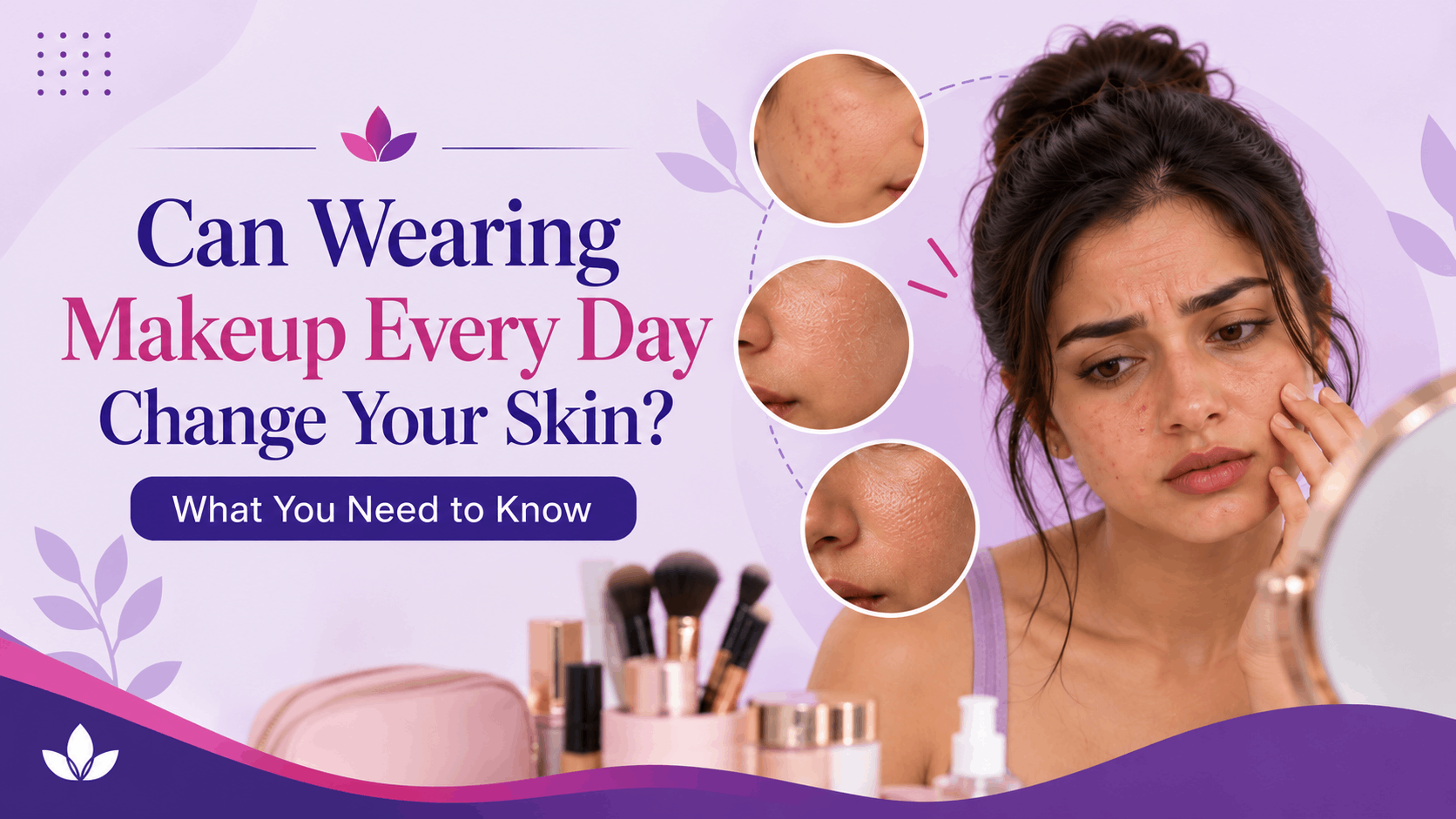
Makeup is a part of many people’s daily routines. Whether it is a little concealer before heading to work, foundation for a polished look, or mascara and lipstick for everyday wear, makeup helps people feel more confident and put together. But have you ever wondered what happens to your skin when you wear makeup almost every day?
Wearing makeup daily does not necessarily damage your skin. However, the products you use, how long you keep them on, and how well you remove them can influence your skin’s health over time. When the wrong products are used or skincare habits are overlooked, your skin may start showing signs of irritation, clogged pores, breakouts and dryness.
How Daily Makeup Can Affect Your Skin
One of the most common concerns associated with daily makeup use is clogged pores. Foundation, concealer and other complexion products can mix with excess oil, sweat and dead skin cells. If these products are not suitable for your skin type or are not removed properly, they may contribute to blackheads, whiteheads and acne breakouts. People with oily or acne-prone skin may notice this more frequently, especially when using heavy or comedogenic formulations.
Another concern is skin irritation and sensitivity. Certain makeup products contain fragrances, preservatives or other ingredients that may not suit everyone. Repeated exposure to these ingredients can sometimes cause redness, itching, dryness or contact dermatitis. If your skin already tends to be sensitive, using multiple products every day may increase the chances of irritation.
Daily makeup can also affect your skin’s moisture balance. Some long-wear and matte formulations may make the skin feel dry or tight, particularly if you have naturally dry skin. On the other hand, heavier products can feel uncomfortable on oily skin, especially in humid weather. This is why choosing products according to your skin type is important.
Can Daily Makeup Lead to Premature Skin Ageing?
There is a common belief that wearing makeup every day can make your skin age faster. However, makeup itself is not directly responsible for premature ageing. Factors such as inadequate sun protection, smoking, environmental exposure and poor skincare habits play a much bigger role. The concern arises when makeup is not removed properly or when the skin is repeatedly exposed to products that cause irritation.
Additionally, using expired makeup or sharing products can introduce unwanted bacteria and increase the risk of skin irritation and eye infections. Makeup brushes and sponges can also collect oil, dead skin cells and product residue when they are not cleaned regularly.
American Academy of Dermatology+2
The Right Way to Wear Makeup Without Harming Your Skin
You do not have to stop wearing makeup to maintain healthy skin. The key is to build better habits around its use. Start by choosing products labelled non-comedogenic, meaning they are formulated to reduce the likelihood of clogging pores. Oil-free formulations may also be helpful for people with oily or acne-prone skin. Always check the ingredients, especially if you have sensitive skin or a history of cosmetic allergies.
Before applying makeup, prepare your skin with a gentle cleanser, moisturiser and broad-spectrum sunscreen. At the end of the day, remove your makeup completely using a suitable makeup remover or micellar water, followed by a gentle face wash. Avoid rubbing or scrubbing your face aggressively, as this can irritate the skin. It is equally important to clean your makeup brushes and sponges regularly and avoid sharing personal makeup products.
Giving your skin occasional makeup-free days can also be a good opportunity to follow a simple skincare routine without layering multiple cosmetic products. Most importantly, never go to bed with your makeup on, even if you have had a long day.
Dermatological Treatments for Makeup-Related Skin Concerns
If frequent makeup use has contributed to breakouts, congestion, uneven skin tone or dull-looking skin, there are dermatological treatments that may help address these concerns. However, the right approach depends on the underlying skin condition and an individual’s skin type.
For acne and clogged pores, treatments such as medical acne management, chemical peels and HydraFacial may be considered following a dermatologist’s assessment. Chemical peels help exfoliate the skin and may improve certain types of acne, uneven pigmentation and rough texture. HydraFacial is another option that focuses on cleansing, exfoliation and hydration, helping improve the appearance of congested and dull-looking skin.
For individuals experiencing pigmentation or uneven skin tone, treatments such as Q-switched laser and other dermatologist-selected pigmentation treatments may be considered depending on the cause. If the skin feels dry, dehydrated or lacks smoothness, skin boosters such as Profhilo may be discussed as an option to improve skin hydration and quality.
These treatments are not necessary simply because someone wears makeup every day. They should be recommended only when there is a specific skin concern, following a proper skin assessment.
Final Thoughts
Wearing makeup every day does not automatically mean your skin will become unhealthy. What matters more is how you choose your products, how you care for your skin underneath the makeup and how thoroughly you remove it at the end of the day.
Makeup should be something you enjoy, not something that comes at the expense of your skin’s health. With the right products, consistent skincare habits and timely dermatological care when needed, you can enjoy your everyday makeup routine while keeping your skin healthy.
FAQs 1. Is it okay to wear makeup every day?
Yes, wearing makeup every day is generally fine. However, using the wrong products or not removing makeup properly can lead to pimples, clogged pores and skin irritation.
2. Can wearing makeup everyday cause pimples?
Yes, some makeup products can block your pores and lead to pimples, especially if you have oily or acne-prone skin. Choose products that are suitable for your skin type.
3. Does wearing makeup make your skin darker?
No, makeup does not directly make your skin darker. However, skipping sunscreen can lead to tanning and dark spots over time.
4. What happens if I sleep with makeup on?
Sleeping with makeup on can cause clogged pores, pimples and skin irritation. It is important to remove all your makeup before going to bed.
5. How should I remove makeup every day?
Use a gentle makeup remover or micellar water, followed by a mild face wash. Finish with a moisturiser to keep your skin soft and hydrated.
6. Which makeup is best for acne-prone skin?
If you have acne-prone skin, choose lightweight, oil-free and non-comedogenic makeup products that are less likely to block your pores.
7. Can daily makeup cause dry skin?
Yes, some makeup products, especially long-lasting matte foundations, can make your skin feel dry or tight. Using a good moisturiser before applying makeup can help.
8. Which treatments can help with makeup-related skin problems?
Treatments such as chemical peels, HydraFacial and medical acne treatments may help with pimples, clogged pores and uneven skin tone. The right treatment depends on your skin type and concern.