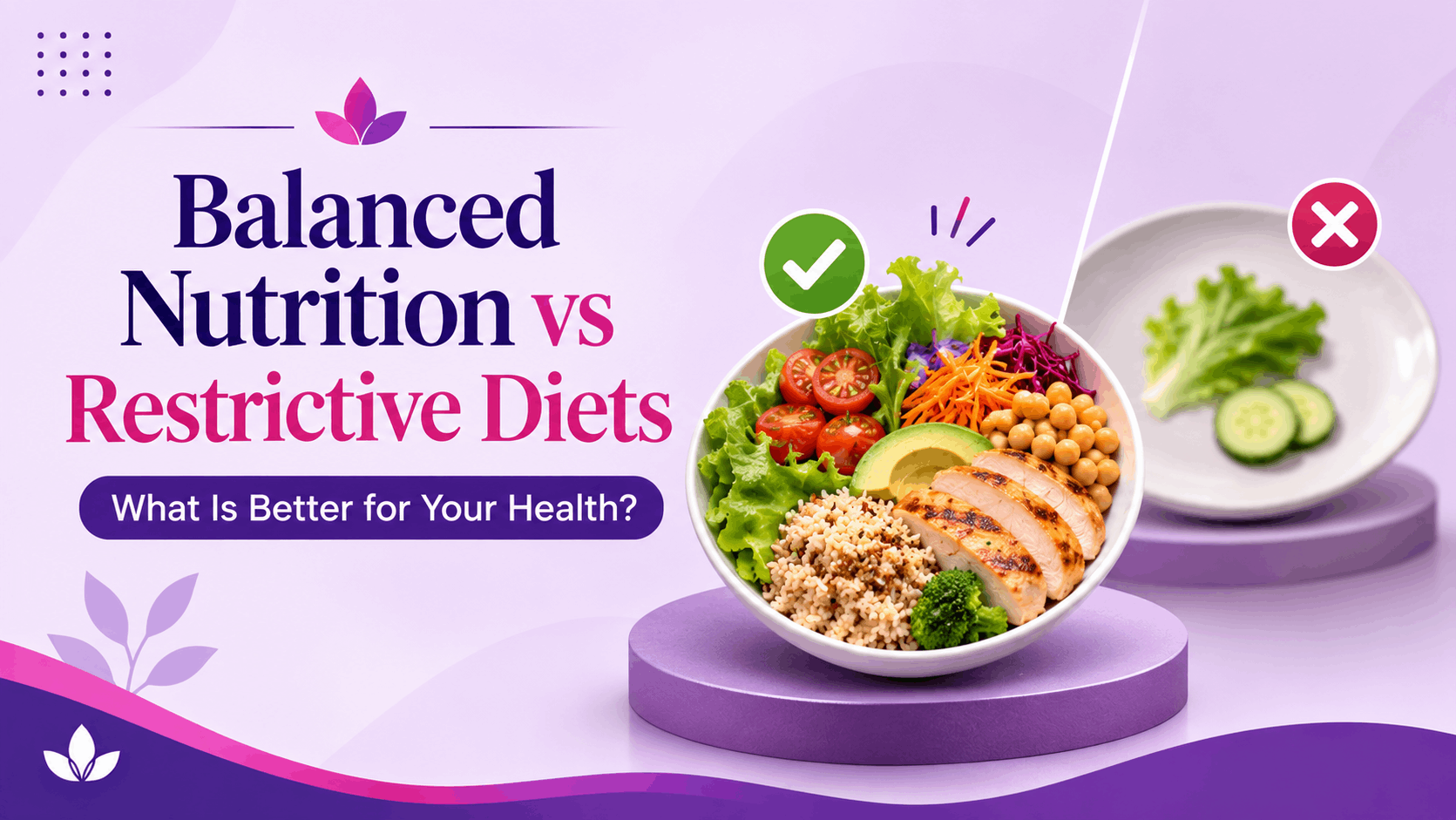
Maintaining a healthy weight is not just about eating less or avoiding certain foods. It is about giving your body the right nutrients to support its everyday needs. While restrictive diets may promise quick results, following an extremely limited eating pattern can make it difficult to maintain a healthy and sustainable lifestyle.
A balanced approach to nutrition focuses on eating a variety of foods, maintaining portion control, and developing habits that support overall health. Instead of constantly worrying about what to eliminate from your meals, it is equally important to understand what your body needs.
Let’s explore why balanced nutrition plays an important role in long-term health and weight management.
What Is Balanced Nutrition?
Balanced nutrition means consuming different types of foods in appropriate proportions to provide the body with essential nutrients.
A balanced diet generally includes:
- Proteins: Help support muscle growth, repair, and overall body functions.
- Carbohydrates: Provide energy for daily activities and bodily functions.
- Healthy Fats: Support hormone production, brain function, and nutrient absorption.
- Fruits and Vegetables: Provide essential vitamins, minerals, fibre, and antioxidants.
- Whole Grains: Offer fibre and help support digestive health.
- Water: Helps maintain hydration and supports several important bodily functions.
The goal is not to eliminate any major food group but to maintain variety and nutritional balance.
Why Can Restrictive Diets Be Difficult to Maintain?
Restrictive diets often involve avoiding specific food groups, drastically reducing calorie intake, or following strict eating schedules.
Although some people may experience short-term weight changes, these approaches can be difficult to follow consistently.
Here are some reasons why:
1. Nutritional Gaps
Eliminating entire food groups may reduce the intake of important nutrients. Depending on the diet, this can lead to inadequate protein, fibre, vitamins, or minerals.
2. Increased Food Cravings
Severely limiting food choices may increase cravings and make eating feel restrictive. This can make it harder to maintain consistent eating habits.
3. Low Energy Levels
Consuming too few calories or insufficient carbohydrates may leave some individuals feeling tired, especially when their nutritional needs are not being met.
4. Difficulty Maintaining Long-Term Results
Highly restrictive eating patterns may be difficult to sustain over time. Once normal eating habits resume, maintaining weight changes can become challenging.
5. An Unhealthy Relationship With Food
Strict food rules can sometimes create unnecessary guilt around eating certain foods. A flexible approach can help develop a healthier relationship with food.
How Does Balanced Nutrition Support Weight Management?
Healthy weight management involves more than simply reducing calorie intake. It requires an approach that supports the body’s nutritional and energy requirements.
Balanced nutrition can help by:
- Supporting healthy metabolism and everyday energy needs.
- Providing protein to maintain muscle mass.
- Improving satiety through fibre-rich foods.
- Supporting digestion and gut health.
- Helping maintain consistent eating habits.
Combining balanced meals with regular physical activity, adequate sleep, and proper hydration can further support overall well-being.
What Does a Balanced Meal Look Like?
Building a balanced plate does not have to be complicated. A simple approach is to include different food groups in appropriate proportions.
A balanced meal can include:
- Half the plate: Vegetables and salads.
- One-quarter of the plate: Protein sources such as dal, paneer, eggs, fish, or chicken.
- One-quarter of the plate: Whole grains such as roti, brown rice, or millets.
You can also include healthy fats and other nutrient-rich foods according to your individual requirements.
Simple Habits to Build a Healthier Relationship with Food
Making small, consistent changes can help improve your eating habits without following extreme restrictions.
- Eat meals at regular intervals according to your routine.
- Include protein and fibre-rich foods in your meals.
- Avoid skipping meals to compensate for eating more earlier.
- Stay hydrated throughout the day.
- Practise mindful eating and pay attention to hunger and fullness.
- Enjoy your favourite foods in moderation without unnecessary guilt.
- Focus on consistency rather than expecting immediate results.
Remember, healthy eating should fit into your lifestyle rather than become a source of constant stress.
Key Takeaway
Healthy eating is not about constantly restricting yourself or labelling foods as good or bad. It is about understanding your body’s nutritional needs and making choices that support your health in the long run.
Balanced nutrition, regular physical activity, and sustainable lifestyle habits can contribute to better overall well-being and healthy weight management.
At Dr. Trasi’s La Piel Clinic, the MetaRevive programme combines HealthyLife and AI Digital Twin Technology to help individuals understand aspects of their health, metabolism, and weight management through a more informed approach.
Frequently Asked Questions (FAQs)
1. Is a balanced diet better than a restrictive diet?
A balanced diet supports nutritional requirements and is generally easier to maintain long-term than highly restrictive eating patterns.
2. Can you lose weight without following a strict diet?
Yes. Weight management can be supported through appropriate portions, balanced meals, regular activity, and consistent lifestyle habits.
3. Does eating carbohydrates cause weight gain?
No. Carbohydrates are an important energy source. Weight changes depend on overall energy intake, expenditure, and other individual factors.
4. Why are protein and fibre important for weight management?
Protein supports muscle maintenance, while fibre helps improve fullness and supports digestive health.
5. Is skipping meals a good way to lose weight?
Not necessarily. Skipping meals may affect energy levels and make it harder for some people to maintain consistent eating habits.
6. Can I eat my favourite foods while following a healthy diet?
Yes. A balanced eating pattern can include your favourite foods in moderation while meeting your nutritional needs.
7. How long does it take to see results from balanced nutrition?
It varies from person to person. Consistent eating habits support long-term health, while weight-related changes depend on individual factors.