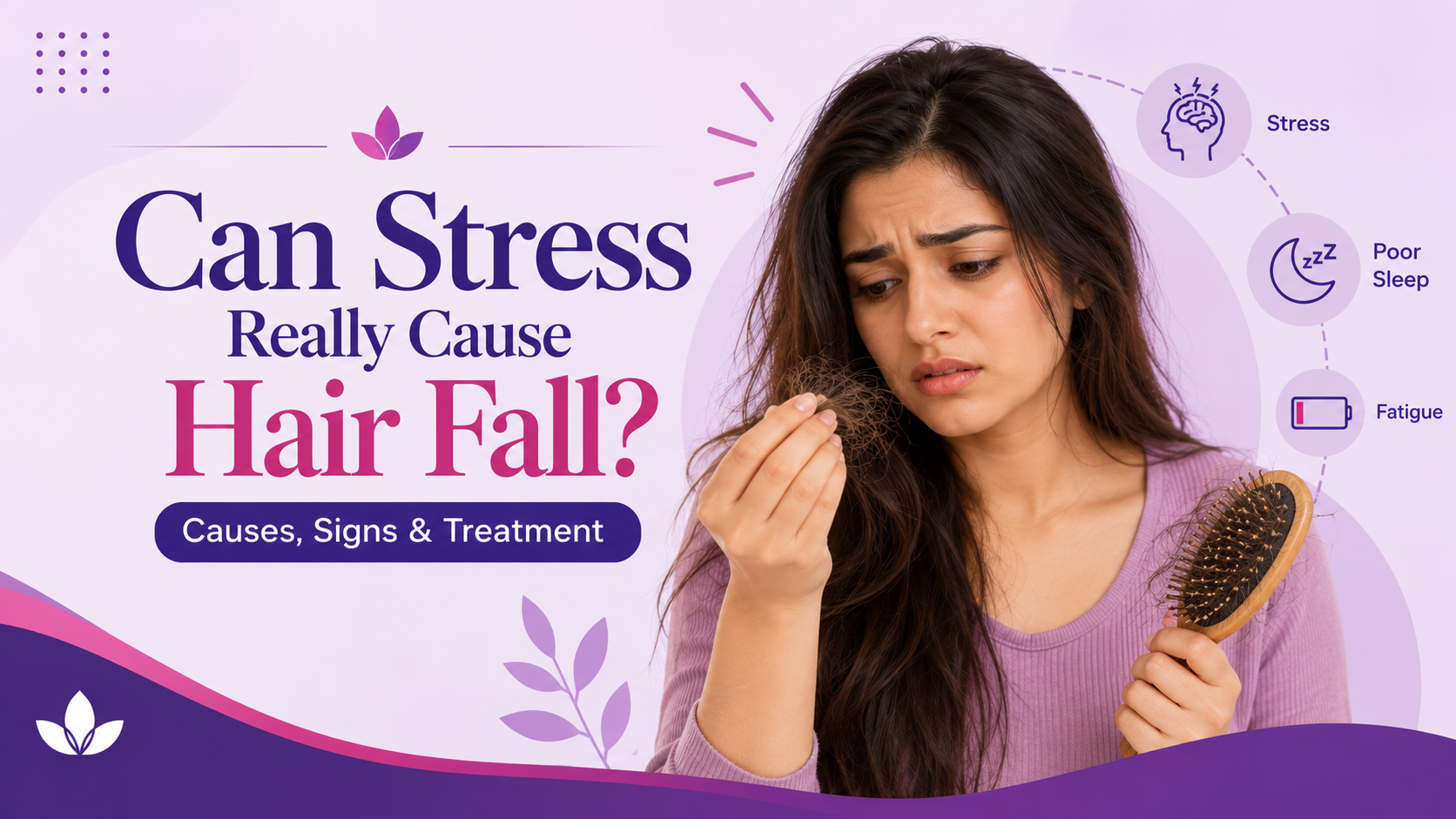
Hair fall can occur due to several factors, including genetics, hormonal changes, nutritional deficiencies and certain medical conditions. Another important factor is physical or emotional stress, which can disrupt the normal hair growth cycle and lead to increased shedding.
Stress-related hair fall is commonly associated with a condition known as telogen effluvium. It often develops after a significant stressful event and may become noticeable weeks or months later. Understanding how this condition develops, what triggers it and when medical evaluation is necessary can help guide appropriate treatment.
How Does Stress Affect the Hair Growth Cycle?
Hair naturally passes through three main stages:
- Anagen (growth phase): Hair actively grows from the follicle.
- Catagen (transition phase): Hair growth slows as the follicle begins to transition.
- Telogen (resting phase): Hair rests before eventually shedding, allowing a new hair to grow.
Significant physical or emotional stress can disturb this cycle and cause more hair follicles than usual to enter the resting phase prematurely. The result may be increased hair shedding, a condition known as telogen effluvium.
Unlike hair loss that develops gradually due to hereditary factors, telogen effluvium often presents as increased shedding across the scalp. It may be noticed while washing, brushing or styling the hair.
However, not every case of stress-related hair loss is telogen effluvium. Other conditions can also contribute to hair loss, making an accurate diagnosis important.
What Types of Stress Can Trigger Hair Fall?
Different forms of physical and emotional stress may contribute to excessive hair shedding.
- Emotional Stress
Prolonged anxiety, work-related pressure, relationship difficulties and major life changes can place stress on the body. In some individuals, this may disrupt the hair growth cycle and contribute to increased shedding.
- Illness or High Fever
A significant illness, infection or high fever can place considerable physical stress on the body. Increased hair shedding may develop during the recovery period rather than immediately during the illness.
- Major Weight Loss and Restrictive Diets
Rapid weight loss and highly restrictive diets may affect the body’s nutritional balance. Inadequate intake of protein, iron and other essential nutrients can contribute to hair shedding, particularly when combined with other physical stressors.
- Surgery or Major Physical Stress
Surgery, serious injury and other major physical events can sometimes trigger telogen effluvium. The body’s response to these events may temporarily alter the normal hair growth cycle.
Why Does Hair Fall Begin Weeks or Months After Stress?
One characteristic of stress-related hair shedding is the delay between the triggering event and noticeable hair fall.
Hair follicles do not immediately shed their hair when the growth cycle is disrupted. Instead, affected hairs move into the resting phase before eventually falling out.
As a result, increased shedding often becomes noticeable around two to three months after the triggering event. This delay can make it difficult to identify the original cause without considering recent illnesses, stressful events, dietary changes or other relevant factors.
Is Stress-Related Hair Fall Permanent?
Stress-related hair shedding is temporary in many cases, particularly when it occurs after a significant stressful event.
Once the triggering factor has resolved, excessive shedding generally begins to settle gradually. New hair growth may follow, although the return of noticeable hair fullness can take several months. Recovery varies depending on the cause, the duration of shedding and individual circumstances.
Persistent or recurrent hair fall requires further evaluation. In some cases, stress may occur alongside hereditary hair loss, nutritional deficiencies, hormonal changes or other scalp and hair conditions.
Stress May Not Be the Only Cause of Hair Fall
Hair loss can have several contributing factors, and more than one may be present at the same time.
Common causes include:
- Genetic and hereditary hair loss
- Hormonal changes
- Thyroid disorders
- Iron or other nutritional deficiencies
- Certain medications
- Scalp conditions and inflammation
- Sudden weight changes or restrictive diets
- Post-pregnancy hormonal changes
This is why hair fall should not automatically be attributed to stress. Hair oils, supplements or other general hair care measures may not address the underlying cause if a medical condition or deficiency is contributing to the shedding.
How Can Hair and Scalp Health Be Supported?
Healthy daily habits can support overall well-being and hair health. However, lifestyle measures alone may not be sufficient to treat every type of hair loss.
Maintain a Balanced Diet
Include adequate protein and a variety of nutrient-rich foods in the diet. Restrictive eating patterns may contribute to nutritional deficiencies that affect hair health. Supplements should be considered according to individual needs and professional advice.
Prioritise Enough Sleep
Maintaining a regular sleep schedule and getting sufficient rest can support overall health and help with stress management.
Manage Ongoing Stress
Regular physical activity, relaxation techniques, hobbies and appropriate breaks from work may help manage ongoing stress and support general well-being.
Follow Gentle Hair Care Practices
Avoid excessive heat styling, tight hairstyles and harsh chemical treatments, particularly when hair is already fragile or shedding excessively. Gentle handling can help reduce avoidable hair breakage, although it does not address the underlying cause of hair shedding.
When Should Hair Fall Be Evaluated by a Dermatologist?
A dermatological consultation is recommended when:
- Hair shedding is sudden, excessive or persistent.
- Shedding continues for several months.
- Visible thinning or a widening parting develops.
- Bald patches appear.
- The scalp becomes itchy, painful, red or inflamed.
- Hair fall occurs alongside other unexplained symptoms.
- The cause of hair loss is unclear.
Telogen effluvium typically causes increased shedding across the scalp. Hair loss in distinct patches or shedding accompanied by scalp inflammation may indicate another condition and should be assessed.
A dermatologist can examine the scalp, assess the pattern and duration of hair loss, review possible triggers and recommend investigations when necessary. This helps distinguish stress-related shedding from other causes that may require different treatment.
Key Takeaway
Stress can contribute to hair fall by disrupting the normal hair growth cycle and triggering excessive shedding. This is temporary in many cases, but recovery can take time. This shedding is temporary in many cases, but recovery can take time and varies between individuals.
Stress is not the only possible cause of hair loss. Genetics, hormonal changes, nutritional deficiencies, medications and scalp conditions may also contribute. Identifying the underlying cause is therefore an important part of deciding on appropriate treatment.
Persistent, excessive or unexplained hair fall should be evaluated by a dermatologist.
Frequently Asked Questions
- Can stress cause sudden hair fall?
Yes. Significant physical or emotional stress can trigger telogen effluvium, which causes increased hair shedding. The shedding often becomes noticeable weeks or months after the triggering event.
- How long after stress can hair fall start?
Hair shedding related to stress often begins around two to three months after a stressful event, although the timing can vary.
- Is stress-related hair fall reversible?
In many cases, stress-related shedding is temporary. Once the trigger has resolved, shedding may gradually decrease and new growth may occur. The time needed for hair fullness to return varies.
- Can lack of sleep cause hair fall?
Poor sleep can affect overall well-being and may contribute to difficulties managing stress. However, hair fall should not automatically be attributed to lack of sleep, as several other causes may need to be considered.
- Should a dermatologist be consulted for stress-related hair fall?
A dermatologist should be consulted if hair shedding is excessive, persistent, unexplained or accompanied by visible thinning, bald patches or scalp symptoms. A clinical assessment can help identify the cause and guide appropriate management.