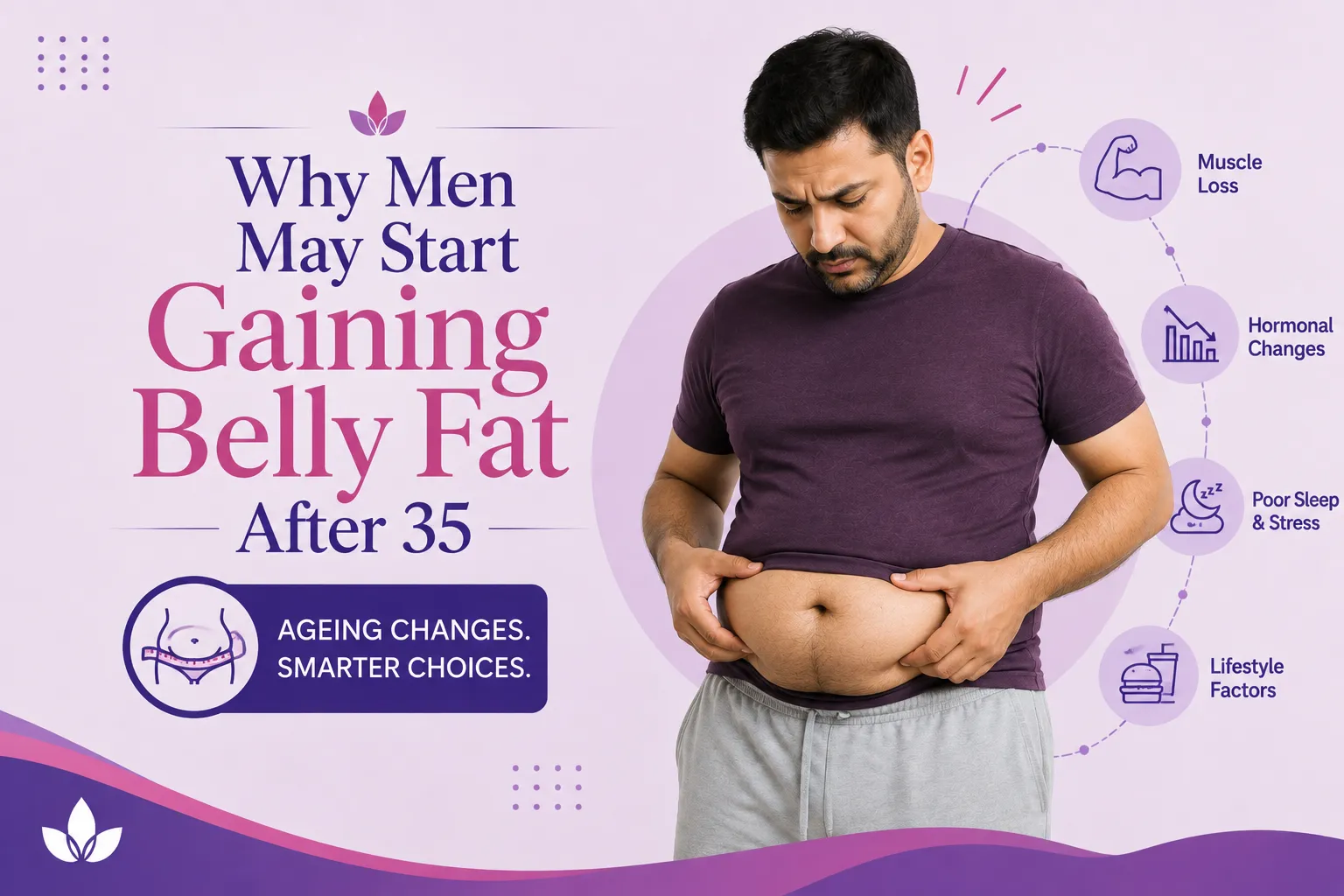
Noticing that your waistline is getting bigger even though your routine hasn’t changed much?
For many men, belly fat becomes more noticeable during their 30s and 40s. Clothes may start fitting differently, the waistline may gradually expand, and losing those extra inches may not feel as easy as it once did.
But turning 35 doesn’t automatically mean you’re destined to gain belly fat.
As men get older, several factors can gradually change at the same time. Muscle mass may decline, daily activity may decrease, calorie needs may change, sleep can become less consistent, stress may increase and hormonal changes may influence body composition.
These changes, combined with eating habits and genetics, can make it easier to accumulate abdominal fat over time.
The good news? Belly fat isn’t an unavoidable part of ageing. Understanding what’s contributing to the change is the first step toward making sustainable lifestyle changes.
Why Does Belly Fat Become More Noticeable After 35?
There isn’t one single reason why men may gain abdominal fat after 35. In most cases, several factors work together.
1. Gradual Loss of Muscle Mass
Muscle mass naturally tends to decline with age, particularly when strength training and regular physical activity are lacking.
Because muscle tissue contributes to daily energy expenditure, losing muscle can reduce the number of calories your body burns at rest and during activity.
This doesn’t mean your metabolism suddenly slows down at 35. Instead, gradual changes in muscle mass, activity levels and body composition can influence how much energy your body uses each day.
So, if your eating habits remain the same while your activity and muscle mass decrease, gradual weight gain can become more likely.
Maintaining muscle therefore becomes increasingly important as you get older.
2. You May Be Moving Less Without Realising It
Your daily routine can change significantly after 35.
Long working hours, commuting, family responsibilities and more time spent sitting can gradually reduce everyday movement.
You may also have less time for sports, workouts or recreational activities than you did in your 20s.
This reduction doesn’t have to be dramatic. Even small decreases in everyday movement can add up over months and years.
For example, fewer walks, less standing, fewer active hobbies and more hours at a desk can all contribute to lower daily energy expenditure.
3. Hormonal Changes Can Influence Body Composition
Testosterone levels generally decline with age, although the rate varies considerably between individuals.
Testosterone plays a role in maintaining muscle mass and body composition. Changes in testosterone levels can therefore be associated with changes in muscle and fat distribution.
However, belly fat shouldn’t automatically be blamed on “low testosterone.”
Diet, physical activity, sleep, stress, genetics, alcohol intake and overall health also influence body composition.
If you are experiencing significant changes in body composition along with other symptoms, it is better to discuss them with a healthcare professional rather than assuming hormones are the cause.
4. Your Calorie Needs May Change
One reason weight can gradually increase with age is that your body may require fewer calories than it did when you were younger.
This can happen when physical activity decreases or muscle mass declines.
Imagine eating roughly the same amount of food you did in your 20s but spending fewer calories through exercise and everyday movement. Over time, even a relatively small calorie surplus can contribute to gradual fat accumulation.
This is why eating habits sometimes need to evolve as your lifestyle changes.
5. Eating Habits Can Change Over Time
Busy schedules can make healthy eating more difficult.
Work meetings, eating out, late dinners, convenience foods and frequent snacking can all increase calorie intake without necessarily feeling like you’re eating significantly more.
Common contributors include:
- Large portion sizes
- Sugary drinks
- Highly processed foods
- Frequent high-calorie snacks
- Regular eating out
- Late-night eating
- Excessive alcohol intake
This doesn’t mean you need to completely eliminate your favourite foods.
Instead, focusing on overall eating patterns, portion sizes and food quality can make a bigger difference than following extreme diets.
Does Metabolism Really Slow Down After 35?
The idea that your metabolism suddenly slows down at 35 is an oversimplification.
Metabolism is influenced by several factors, including body size, muscle mass, physical activity, age and other individual characteristics.
What often changes with age is the combination of less muscle, less movement and changing lifestyle habits.
This can make it easier to consume more energy than your body uses.
Rather than focusing on “boosting metabolism” with quick fixes, it is more useful to focus on maintaining muscle, staying physically active and eating according to your body’s changing needs.
6. Alcohol Can Contribute to Abdominal Weight Gain
Alcohol provides calories, and regular or excessive drinking can make it easier to consume more calories than your body needs.
And it isn’t only beer.
Wine, spirits and cocktails can all contribute to overall calorie intake.
Alcohol can also influence eating habits, making high-calorie snacks or larger meals more tempting.
Reducing alcohol intake can therefore be one practical step toward better weight management.
7. Poor Sleep Can Affect Weight
Sleep is another factor that is easy to overlook.
Insufficient sleep has been associated with increased calorie intake and greater accumulation of abdominal and visceral fat.
When you’re consistently tired, maintaining healthy eating and exercise habits can also become more difficult.
Busy schedules, work demands, stress and late-night screen time can all interfere with sleep.
Aim for a consistent sleep schedule and adequate, good-quality sleep rather than treating sleep as something you can regularly sacrifice.
8. Stress Can Influence Your Eating and Activity
Stress doesn’t necessarily cause belly fat directly, but it can influence several behaviours that affect weight.
For some people, stressful periods may lead to:
- More frequent snacking
- Comfort eating
- Increased cravings
- Less physical activity
- Poorer sleep
- More frequent alcohol consumption
When these patterns continue for months or years, they can contribute to gradual weight gain.
Managing stress therefore isn’t just about feeling better mentally. It can also support healthier lifestyle habits.
Is All Belly Fat the Same?
No.
There are two main types of fat around the abdomen.
Subcutaneous fat sits just beneath the skin and is the type you can pinch.
Visceral fat is stored deeper inside the abdomen, around internal organs.
Excess visceral fat is associated with an increased risk of health concerns such as high blood pressure, abnormal blood fats, elevated blood sugar, fatty liver and cardiovascular disease.
This is why an increasing waistline can be more than just a cosmetic concern.
It can also provide useful information about overall metabolic health.
Why Waist Size Can Matter More Than the Number on the Scale
Body weight doesn’t tell the whole story.
Two people can weigh the same amount but have very different body compositions.
Someone may have more muscle and less body fat, while another person may carry a greater proportion of their weight as abdominal fat.
Tracking waist circumference alongside body weight can therefore provide additional information about changes in body composition.
For men, a waist circumference of more than 40 inches (102 cm) is commonly used as a marker of increased health risk related to abdominal fat.
However, waist circumference should be considered alongside other health factors rather than used as a diagnosis on its own.
Can You Reduce Belly Fat After 35?
Yes.
Turning 35 does not mean fat loss is no longer possible.
However, the goal shouldn’t be to simply do hundreds of crunches or follow an extreme diet.
Abdominal exercises can strengthen your core muscles, but they cannot specifically remove fat from your stomach.
Reducing overall body fat requires a combination of sustainable nutrition, physical activity, strength training and healthy lifestyle habits.
Focus on a Balanced Diet
Build your meals around vegetables, fruits, whole grains, lean protein and minimally processed foods.
Pay attention to portion sizes and reduce frequent consumption of sugary drinks and highly processed, calorie-dense foods.
Instead of following a highly restrictive diet, focus on eating habits that you can maintain long term.
Prioritise Protein and Nutrient-Dense Foods
Adequate protein can support muscle maintenance when combined with resistance training.
Include appropriate sources of protein along with vegetables, whole grains, fruits and other nutrient-dense foods.
Your exact nutritional needs can vary depending on your age, activity level, body composition and overall health.
Include Strength Training
Resistance training can help maintain or build muscle mass, which becomes particularly important with age.
It can also support a healthier body composition and physical strength.
Strength training doesn’t necessarily mean lifting extremely heavy weights. Exercises can be adapted to your fitness level and experience.
Stay Physically Active
Regular movement matters beyond structured workouts.
Walking, cycling, swimming and other forms of aerobic activity can help increase energy expenditure and support cardiovascular health.
General guidance recommends at least 150 minutes of moderate-intensity aerobic activity per week, along with strength training at least twice a week.
If you’re currently inactive, gradually increasing your activity may be more sustainable than trying to change everything overnight.
Get Consistent Sleep
Aim for adequate, good-quality sleep and maintain a consistent sleep schedule whenever possible.
Better sleep can support appetite regulation, energy levels and overall metabolic health.
Limit Alcohol
Reducing alcohol intake can help lower unnecessary calorie consumption and support healthier weight-management habits.
Can You Lose Belly Fat Without a Strict Diet?
You don’t necessarily need a highly restrictive diet to reduce abdominal fat.
Extreme diets may produce short-term weight loss but can be difficult to maintain.
A more sustainable approach is to focus on habits such as:
- Eating appropriate portions
- Including protein and vegetables in meals
- Choosing minimally processed foods more often
- Limiting sugary drinks
- Reducing frequent snacking
- Staying physically active
- Getting enough sleep
- Managing alcohol intake
Consistency generally matters more than perfection.
Why You Shouldn’t Focus Only on the Weighing Scale
Weight can fluctuate because of hydration, food intake and other short-term factors.
Instead of focusing only on the number on the scale, consider looking at several indicators together:
Waist circumference: Can help track changes in abdominal fat.
Strength and fitness: Improvements can indicate positive changes even when body weight changes slowly.
Energy levels: Consistently low energy may be worth discussing with a healthcare professional.
Eating and sleep patterns: These can provide useful clues about lifestyle factors affecting weight.
Looking at the bigger picture can provide a better understanding of your progress.
When Should You Pay Attention to Belly Fat?
A gradually increasing waistline deserves attention, particularly when it occurs alongside changes such as:
- High blood pressure
- Elevated blood sugar
- Abnormal cholesterol levels
- Significant unexplained weight gain
- Persistent fatigue
- Changes in appetite or cravings
If you’re gaining abdominal fat despite maintaining a healthy lifestyle, or experiencing other unexplained changes, consider discussing them with a healthcare professional.
Your Waistline Can Tell You More Than You Think
Changes in waist circumference can sometimes reflect changes in overall metabolic health.
Weight gain isn’t always simply about eating too much or exercising too little. Sleep, stress, activity, nutrition, muscle mass and other factors can all contribute to changes in body composition.
If you’re noticing changes in your weight, waistline, energy levels or eating patterns, looking beyond the weighing scale can help provide a more complete picture of your health.
Key Takeaway
Belly fat after 35 isn’t inevitable.
However, age-related changes in muscle mass, physical activity, calorie needs, sleep, stress, eating habits and hormones can make maintaining a healthy waistline more challenging.
The goal isn’t to fight ageing. It’s to adapt your lifestyle as your body changes.
Maintaining muscle, staying active, eating a balanced diet, getting enough sleep and keeping alcohol intake in check can all support a healthier body composition as you get older.
Most importantly, don’t wait until belly fat becomes a major concern before paying attention to your overall health. Small, consistent changes can add up over time.
FAQs
Why do men gain belly fat after 35?
Muscle loss, reduced physical activity, changes in calorie needs, lifestyle habits, sleep and hormonal changes can all contribute to increasing abdominal fat.
Does testosterone cause belly fat after 35?
Testosterone levels generally decline with age and can influence body composition, but belly fat has multiple causes and shouldn’t be attributed to testosterone alone.
Can exercise alone reduce belly fat?
Exercise helps, but combining regular physical activity with a balanced diet and appropriate calorie intake is generally more effective for reducing overall and abdominal body fat.
Can belly fat be dangerous?
Yes. Excess visceral fat is associated with an increased risk of conditions including high blood pressure, high blood sugar, heart disease and fatty liver.
Can belly fat be reduced after 35?
Yes. Age doesn’t prevent fat loss. A consistent approach involving nutrition, physical activity, strength training, sleep and sustainable lifestyle changes can help reduce excess body fat.