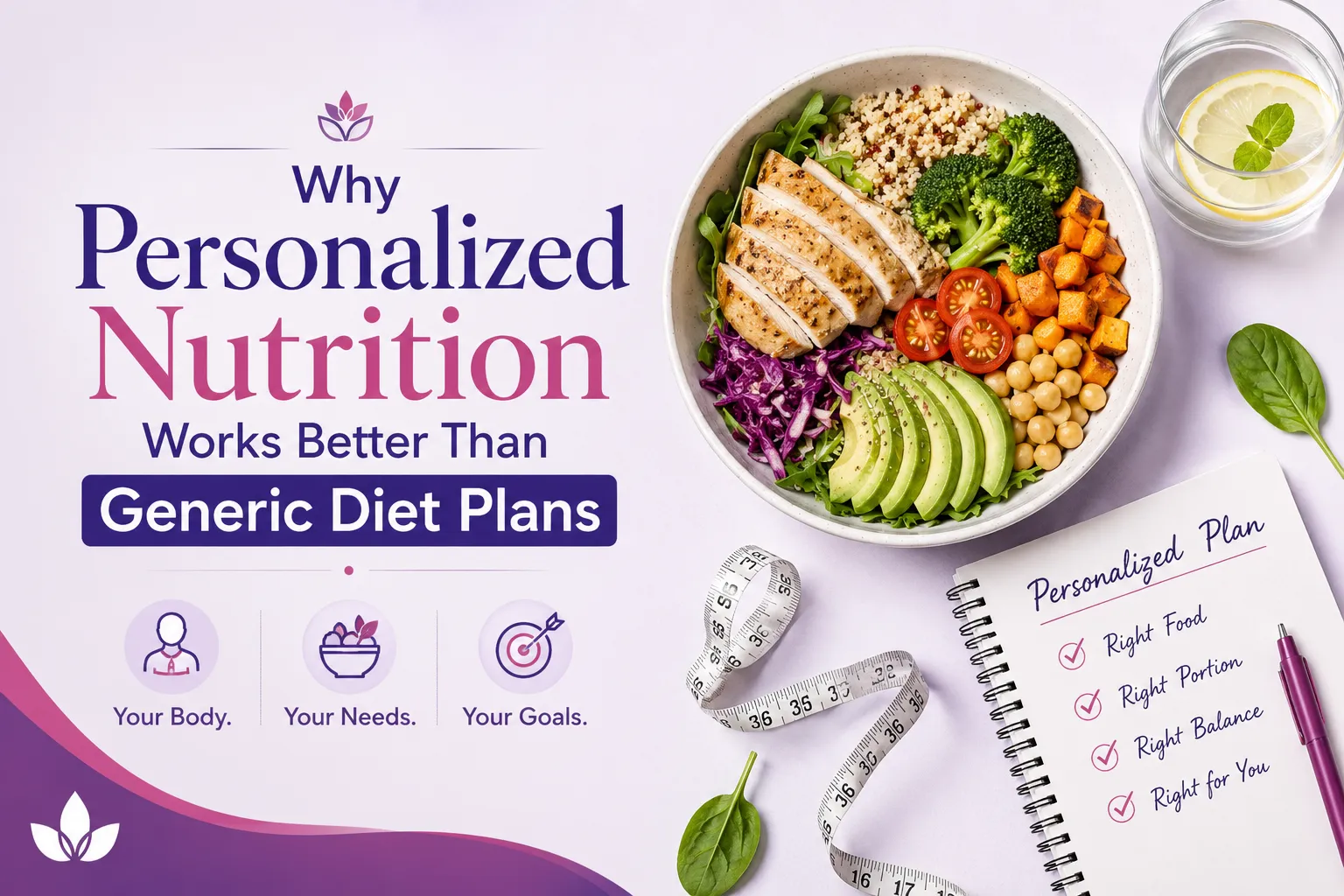
When it comes to nutrition, there is no shortage of diet plans promising quick or lasting results. From low-carb and high-protein diets to calorie-restricted meal plans, many approaches can work for some people—but that does not mean they will work equally well for everyone.
The reason is simple: nutrition is not one-size-fits-all.
Our food choices, metabolism, lifestyle, activity levels, health goals, food preferences, sleep, stress and other individual factors can influence how we respond to a particular eating pattern. Even people following the same diet may experience very different results. Research has also found that personalised dietary advice can lead to greater improvements in dietary intake than generalised advice in some studies.
This is where personalised nutrition comes in.
Why Generic Diet Plans May Not Work for Everyone
Generic diet plans usually follow the same structure for a large group of people. While general healthy-eating guidelines can be useful, they may not consider individual routines, preferences, nutritional needs or goals.
For example, two people may want to lose weight but have completely different lifestyles, food preferences and daily schedules. Following the same plan may therefore be unrealistic for one of them.
1. It Starts with the Individual
Personalised nutrition begins by understanding the person—not simply assigning a fixed list of foods.
Your nutritional needs can be influenced by your daily routine, activity, preferences and health goals. Understanding these factors allows dietary recommendations to become more relevant to your actual lifestyle.
This can make healthy eating feel less like following a temporary diet and more like building a routine that fits your life.
2. It Focuses on Sustainable Changes
One of the biggest challenges with dieting is maintaining changes over time.
A plan may look perfect on paper but become difficult when it conflicts with someone’s schedule, food preferences or social routine.
Personalised nutrition focuses on practical changes that can be easier to incorporate into everyday life.
The objective is not necessarily to make the diet more complicated. It is to make it more suitable for the person following it.
3. It Takes Different Goals into Account
Not everyone approaches nutrition with the same goal.
Someone may want to:
- Manage weight
- Improve energy levels
- Support metabolic health
- Build healthier eating habits
- Improve overall nutrition
- Support fitness goals
A personalised approach can help align dietary recommendations with the individual’s specific objective instead of applying the same strategy to everyone.
4. It Recognises That Your Lifestyle Matters
Nutrition does not exist in isolation.
Sleep, physical activity, stress, meal timing and daily routines can all influence eating behaviour and health. Personalised nutrition considers these lifestyle factors alongside food choices rather than looking at individual foods alone.
This broader perspective can help create a more realistic approach to healthy living.
5. It Can Help You Understand Your Own Eating Patterns
Personalisation is not simply about receiving a meal plan. It can also help people understand why certain eating habits may be difficult to change.
For example, frequent snacking may be connected to an irregular routine, while skipping meals may be linked to a demanding work schedule.
Recognising these patterns can make it easier to identify realistic changes.
Personalised Does Not Mean “Complicated”
Personalised nutrition is sometimes associated with advanced testing or highly technical diets. However, personalisation can exist at different levels.
A nutrition professional may tailor recommendations using everyday information such as eating habits, lifestyle, preferences, goals and health history. More advanced approaches may incorporate biomarkers or other biological information where appropriate.
Importantly, the science of personalised nutrition is still developing. While some research shows improvements in dietary intake with personalised advice, evidence for broader health outcomes has not been consistently positive across all studies.
That means personalised nutrition should be viewed as a thoughtful, evidence-informed approach, rather than a promise of guaranteed results.
Generic Advice vs Personalised Nutrition
| Generic Diet Plan | Personalised Nutrition |
| Same approach for many people | Adapted to the individual |
| Focuses on general recommendations | Considers individual needs and goals |
| May not account for lifestyle | Takes lifestyle into consideration |
| Can feel restrictive | Can be designed around preferences |
| Often follows a fixed structure | Can be adjusted as needs change |
| Focuses mainly on what to eat | Looks at nutrition and lifestyle more broadly |
Key Takeaways
Personalized nutrition recognises that every individual has different nutritional needs, routines and goals. Instead of following a fixed diet simply because it worked for someone else, a tailored approach focuses on what is practical and appropriate for you. When nutrition fits your lifestyle, making healthier choices can become more realistic and sustainable.
FAQs
- What is personalized nutrition?
It is an approach where dietary guidance is tailored to an individual’s needs, lifestyle, preferences and health goals.
- Is personalized nutrition better than a generic diet?
It can be more suitable because it considers individual differences instead of applying the same approach to everyone.
- Do I need genetic testing for personalized nutrition?
Not necessarily. Personalization can be based on your lifestyle, eating habits, goals and relevant health information.
- Can personalized nutrition help with weight management?
It can support healthier eating habits and make dietary changes more relevant to your lifestyle and goals.
- Is personalized nutrition only for weight loss?
No. It can support different goals, including better eating habits, fitness, metabolic health and overall wellness.
- Can a personalized nutrition plan change over time?
Yes. It can be adjusted as your lifestyle, goals and nutritional needs change.