Have you noticed your skin looking a little dull lately? Maybe your favourite skincare products don’t seem to work as well as they once did, or you’re spotting subtle changes in the mirror that are difficult to explain.
Many people associate skin ageing with wrinkles and sagging. In reality, the process often begins much earlier.
Changes such as dryness, loss of radiance, uneven skin tone and reduced firmness can appear long before deeper signs of ageing become noticeable. Recognising these early changes can help you make informed decisions about your skincare routine and overall skin health.
What Are the Early Signs of Skin Ageing?
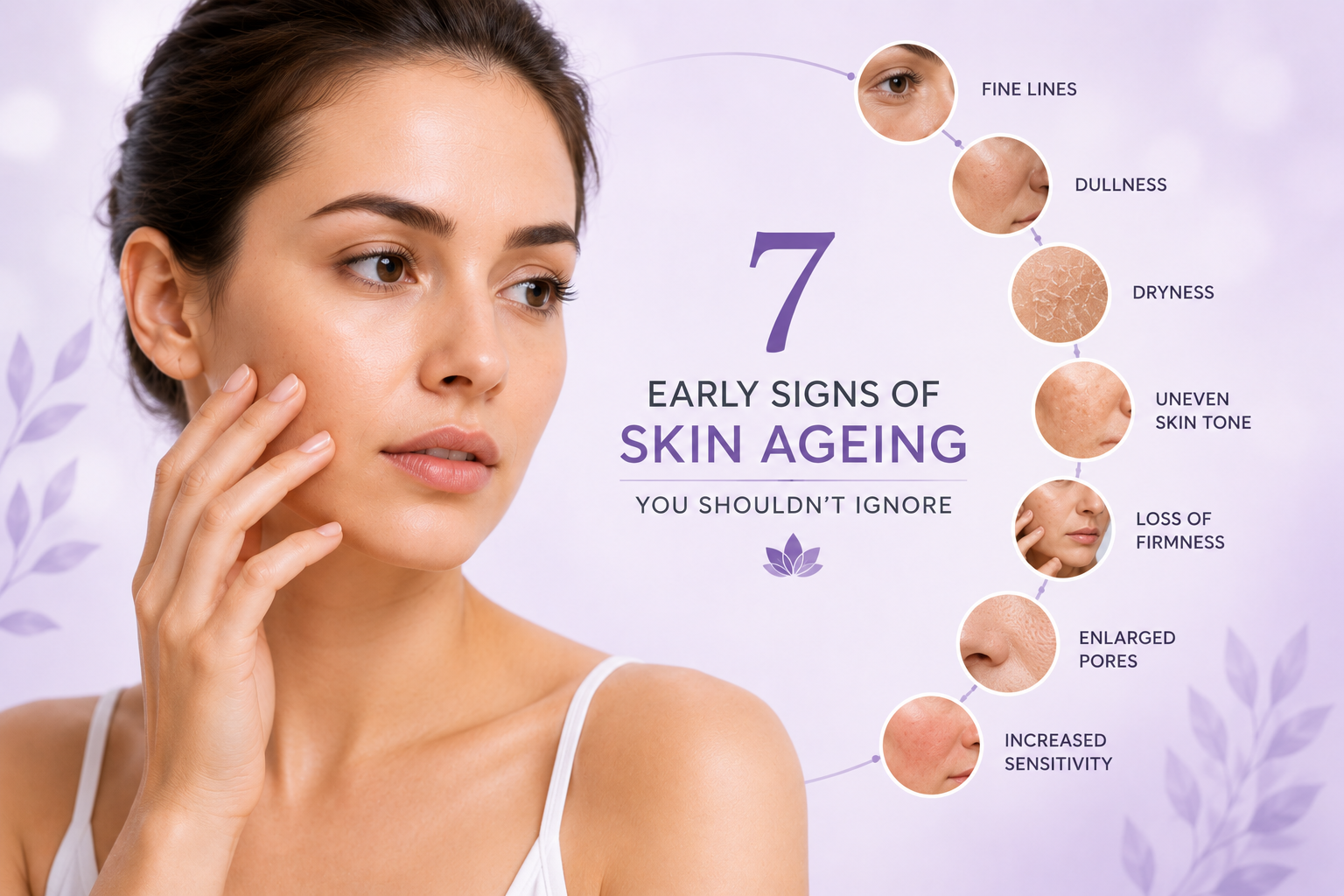
Early signs of skin ageing often include fine lines, dullness, dryness, uneven skin tone, enlarged pores, reduced firmness, and increased skin sensitivity. These changes can develop gradually as collagen production slows and the skin’s natural barrier becomes less efficient over time.
What Happens to Your Skin as It Ages?
As skin ages, the production of collagen, elastin, and natural oils gradually declines.
These components help keep skin firm, smooth, hydrated, and resilient. At the same time, factors such as sun exposure, pollution, stress, smoking and lifestyle habits can accelerate visible signs of ageing.
As a result, skin may become less effective at:
- Retaining moisture
- Maintaining elasticity
- Repairing itself
- Protecting against environmental damage
These changes often begin subtly before becoming more noticeable over time.
- Fine Lines That Linger
Fine lines are often one of the earliest visible signs of skin ageing.
You may notice small lines around:
- The eyes
- The forehead
- The corners of the mouth
Unlike expression lines that disappear when your face relaxes, these lines may start to remain visible even when your skin is at rest.
- Dull or Tired-Looking Skin
If your skin has lost its natural glow, ageing could be one of the contributing factors.
As skin cell turnover slows down, dead skin cells can accumulate on the surface, causing your complexion to appear:
- Dull
- Rough
- Less radiant
Even with adequate sleep, your skin may not look as refreshed as it once did.
- Dryness and Dehydration
Ageing skin naturally produces less oil, making it more prone to dryness.
Common signs include:
- Tightness after cleansing
- Flaky patches
- Rough texture
- Increased sensitivity
Dry skin can also make fine lines appear more noticeable.
- Uneven Skin Tone and Dark Spots
Years of sun exposure can gradually become visible through changes in pigmentation.
You may notice:
- Small dark spots
- Uneven skin tone
- Areas of discolouration
These changes often develop gradually and are among the most common early signs of skin ageing.
- Loss of Firmness
Collagen and elastin help keep skin firm, smooth, and resilient.
As their production declines, you may begin to notice:
- Reduced skin elasticity
- Softer facial contours
- Mild sagging around the jawline or cheeks
These changes can occur long before significant sagging becomes visible.
- Enlarged Pores
Many people do not realise that enlarged pores can be associated with ageing skin.
As skin loses elasticity, pores may appear larger and more noticeable, particularly on the nose, cheeks, and forehead.
Sun damage can further contribute to this change over time.
- Increased Skin Sensitivity
Ageing can weaken the skin barrier, making skin more vulnerable to environmental stressors and irritation.
You may experience:
- Redness
- Dryness
- Irritation from skincare products
- Increased reactivity to weather changes
Skin that once tolerated certain products easily may suddenly become more sensitive.
What Causes Premature Skin Ageing?
While ageing is a natural process, certain factors can accelerate visible changes in the skin.
Common contributors include:
- Excessive sun exposure
- Smoking
- Air pollution
- Chronic stress
- Poor sleep quality
- Unhealthy dietary habits
- Inconsistent skincare routines
Protecting the skin from these factors can help support healthier-looking skin over time.
How to Support Healthy Ageing Skin
While skin ageing is a natural process, healthy habits can help support your skin’s appearance and overall health.
- Wear sunscreen daily to protect against UV damage.
- Stay hydrated throughout the day.
- Use a gentle cleanser and moisturiser.
- Include antioxidant-rich foods in your diet.
- Prioritise quality sleep for skin repair and recovery.
- Exercise regularly to support circulation.
- Avoid smoking and limit excessive alcohol consumption.
- Manage stress through mindfulness, meditation, or relaxation techniques.
Why Paying Attention Early Matters
The earliest signs of skin ageing are often subtle, which makes them easy to overlook.
Recognising these changes early allows you to adjust your skincare routine, protect your skin barrier, and adopt habits that support long-term skin health.
Small, consistent steps taken early can often have a greater impact than trying to address concerns after they become more noticeable.
Key Takeaway
Skin ageing does not begin with deep wrinkles alone. Fine lines, dullness, dryness, uneven skin tone, enlarged pores, reduced firmness, and increased sensitivity are often among the earliest signs. Identifying these changes early and supporting your skin with healthy habits can help maintain stronger, healthier-looking skin over time.
FAQs
What are the first signs of skin ageing?
Fine lines, dullness, dryness, uneven skin tone, enlarged pores, reduced firmness and increased sensitivity are among the most common early signs of skin ageing.
At what age does skin ageing begin?
Skin ageing is a gradual process that can begin as early as the mid-to-late twenties, although visible signs may vary depending on genetics, lifestyle, and environmental factors.
What causes premature skin ageing?
Excessive sun exposure, smoking, pollution, stress, poor sleep, and unhealthy lifestyle habits can contribute to premature skin ageing.
Can skin ageing be slowed down?
While ageing cannot be stopped, healthy habits such as daily sunscreen use, proper hydration, quality sleep, and a consistent skincare routine can help support healthier-looking skin.
Why does ageing skin become more sensitive?
As the skin barrier weakens with age, the skin may become more prone to dryness, irritation, and sensitivity to environmental factors or skincare products.