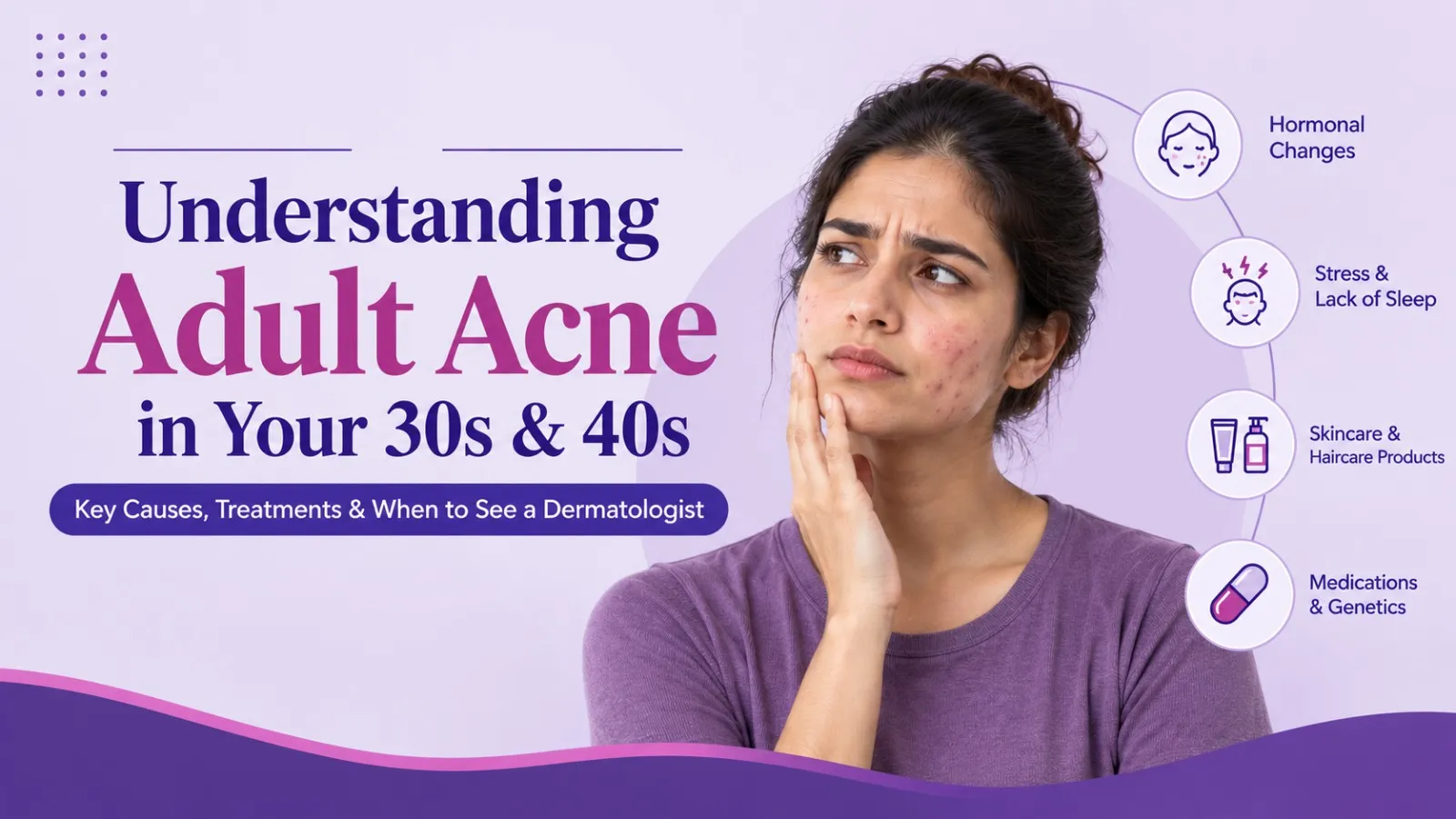
Acne is not just a teenage concern. If you are still experiencing breakouts in your 30s or 40s, hormonal changes, stress, skincare and haircare products, medications and other factors may be contributing to the problem.
Adult acne can be frustrating, especially when you thought your teenage years were behind you. Breakouts may appear as blackheads, whiteheads, red pimples or deep, painful bumps. In some cases, acne can also leave behind dark spots and scars.
The good news is that adult acne can be managed with the right diagnosis and treatment plan. Understanding what triggers your breakouts is the first step towards healthier-looking skin.
What Causes Adult Acne?
Acne develops when hair follicles become clogged with excess oil and dead skin cells. Inflammation and the activity of acne-associated bacteria can contribute to the development of pimples and deeper lesions.
Several factors may contribute to adult acne, including the following.
Hormonal Changes
Hormones can continue to influence your skin well into adulthood. Breakouts may become more noticeable around the menstrual cycle, during pregnancy, after stopping birth control pills or during perimenopause and menopause.
Hormonal acne often appears around the chin, jawline, lower face and neck, although it can affect other areas as well.
Stress and Lack of Sleep
Stress may worsen acne by influencing hormonal activity and inflammatory responses. Poor sleep and an irregular routine may also affect the skin’s ability to recover.
Managing stress, maintaining a consistent sleep schedule and following a suitable skincare routine may help support overall skin health.
Skincare and Haircare Products
Heavy creams, oily hair products, makeup and certain sunscreens may contribute to clogged pores. If you are prone to acne, look for products labelled non-comedogenic, oil-free or won’t clog pores.
Introduce new products gradually and avoid using too many active ingredients at once, as this may cause irritation.
Medications
Certain medications, including corticosteroids, lithium and testosterone treatments, may trigger or worsen acne in some individuals.
If you notice breakouts after starting a medication, speak with your doctor. Do not stop or change any prescribed medication without medical advice.
Family History
Genetics can also influence your likelihood of developing acne. If acne runs in your family, you may be more prone to persistent breakouts or acne that begins in adulthood.
Why Does Acne Continue in Your 30s and 40s?
Adult acne is particularly common among women, partly because hormonal fluctuations can continue during the reproductive years and later stages of life. Changes in estrogen and androgen levels may influence oil production and contribute to breakouts.
However, adult acne can affect anyone. Men may also experience persistent or newly developing acne due to hormonal factors, stress, medications and other contributing causes.
Sudden or severe acne in adulthood deserves medical attention, especially when accompanied by irregular menstrual cycles, increased facial hair or other new symptoms. A dermatologist can assess whether acne or another skin condition is responsible.
What Does Adult Acne Look Like?
Adult acne can differ from the breakouts commonly experienced during adolescence. While teenage acne often affects the forehead, nose and cheeks, adult acne may appear more frequently around the lower face, chin and jawline.
Common signs include:
- Blackheads and whiteheads
- Small red pimples
- Deep, painful acne lesions
- Recurring breakouts around the chin and jawline
- Acne on the chest, shoulders or back
- Dark spots or Acne scars left after breakouts heal
Not every acne-like breakout is acne. Conditions such as folliculitis and perioral dermatitis can look similar but may require different treatments. A proper diagnosis helps determine the most appropriate approach.
How Is Adult Acne Treated?
Adult acne treatment depends on the type of acne, its severity, your skin type and whether you have pigmentation or scarring. A dermatologist can recommend a treatment plan based on your individual skin concerns.
Topical Treatments
Mild to moderate acne may improve with topical treatments containing ingredients such as:
- Salicylic acid: Helps exfoliate the skin and unclog pores.
- Benzoyl peroxide: Helps reduce acne-associated bacteria and inflammatory lesions.
- Adapalene and other topical retinoids: Help prevent clogged pores and reduce the formation of new acne lesions.
- Azelaic acid: Helps manage acne and may improve the appearance of post-acne dark spots.
These ingredients should be introduced carefully, particularly if your skin is dry or sensitive. Using multiple active ingredients simultaneously may cause irritation.
If you are pregnant, planning a pregnancy or breastfeeding, consult your dermatologist before starting acne treatment. Some acne medications and topical ingredients may not be suitable during pregnancy.
Oral Medications
Moderate to severe acne may require prescription medication. Depending on the cause and severity, a dermatologist may recommend oral antibiotics, hormonal treatments or other suitable medicines.
Hormonal treatments may be considered for some women experiencing persistent acne, particularly around the lower face and jawline. Oral medications require professional evaluation and monitoring, so avoid self-medicating or using prescription treatments without guidance.
Chemical Peels
Certain chemical peels may help manage clogged pores, active acne and post-acne pigmentation. The appropriate peel depends on your skin type, acne severity and individual concerns.
A dermatologist can assess whether a chemical peel is suitable for you and recommend the appropriate treatment approach.
Acne Scar Treatments
Acne scars may appear as pits, uneven skin texture or raised marks. Treating established scars usually requires a different approach from managing active acne.
Depending on the type and severity of scarring, procedures such as microneedling or laser treatments may be considered. A dermatologist can determine which options are suitable for your skin and whether active acne should be controlled before proceeding.
Common Adult Acne Mistakes to Avoid
Certain skincare habits may worsen irritation or make acne more difficult to manage. Avoiding these common mistakes can help support your treatment plan.
Using Harsh Products
Strong cleansers, abrasive scrubs and frequent exfoliation may irritate the skin and damage its protective barrier. Choose a gentle cleanser and avoid over-exfoliating.
Changing Products Too Frequently
Acne treatments often take several weeks to show improvement. Switching products too quickly may cause irritation and make it difficult to identify what is helping your skin.
Follow a consistent routine and seek professional advice if your acne is not improving.
Picking or Squeezing Pimples
Picking or squeezing pimples can increase inflammation and raise the risk of dark spots and scarring. Allow lesions to heal naturally and seek appropriate treatment for persistent or painful acne.
Ignoring Moisturiser
Some acne treatments cause dryness and irritation. A lightweight, non-comedogenic moisturiser can help maintain the skin’s moisture balance and improve treatment tolerance.
Skipping Sunscreen
Sun exposure can make post-acne pigmentation more noticeable. Use a broad-spectrum, non-comedogenic sunscreen during the day to help protect your skin.
When Should You See a Dermatologist?
Consider consulting a dermatologist if:
- Acne continues to return despite following a consistent routine.
- Breakouts are deep, painful or widespread.
- Acne is leaving dark spots or scars.
- Your skin becomes irritated from acne products.
- Acne develops suddenly or severely in adulthood.
- Your current treatment is not helping.
- You are unsure whether your breakouts are actually acne.
Early treatment can help control active acne and reduce the risk of long-term scarring. A dermatologist can also identify contributing factors and recommend a personalised approach to managing recurring breakouts.
Adult Acne Treatment at La Piel
At La Piel, adult acne treatment begins with understanding your skin, the type of acne you have and the factors that may be contributing to recurring breakouts.
Following a professional assessment, your treatment plan may include medical acne management, topical medication, chemical peels or other appropriate dermatological procedures. If acne has also caused pigmentation or scarring, these concerns can be evaluated as part of your overall treatment plan.
The focus is on selecting suitable treatments for your individual skin concerns rather than following a one-size-fits-all approach.
If you are experiencing persistent acne in your 30s or 40s, consult a dermatologist to understand your treatment options and take the next step towards managing your skin concerns.
Key Takeaway
Adult acne is common and treatable, even in your 30s and 40s.
Hormonal changes, stress, skincare products, medications and genetics may all contribute to recurring breakouts. The most suitable treatment depends on the cause, severity and condition of your skin.
Avoid harsh products and self-prescribing medications. If your acne is persistent, painful or leaving behind dark spots and scars, consult a dermatologist for a personalised treatment plan.
Frequently Asked Questions
1. Is adult acne common in your 30s and 40s?
Yes. Acne can continue from the teenage years or begin for the first time during adulthood. Hormonal fluctuations, genetics, medications and other factors may contribute to persistent breakouts.
2. Why does adult acne appear around the jawline?
Breakouts around the chin and jawline may be associated with hormonal fluctuations, particularly in women. However, other factors can also contribute, so the location of acne alone cannot confirm its cause.
3. Can stress cause adult acne?
Stress may worsen existing acne by influencing hormonal activity and inflammatory responses. Maintaining a consistent sleep schedule and managing stress may help support overall skin health, although these measures may not be sufficient to control acne on their own.
4. Can I use teenage acne products for adult acne?
Some acne-fighting ingredients may be suitable for adults, but the right treatment depends on your skin type and the severity of your acne. Strong products and excessive exfoliation can cause irritation, so choose products carefully and consult a dermatologist when needed.
5. When should I consult a dermatologist for adult acne?
Consult a dermatologist if your acne is persistent, painful, sudden, leaving dark spots or scars, or not improving with your current routine. Professional assessment can help identify the cause and determine an appropriate treatment plan.