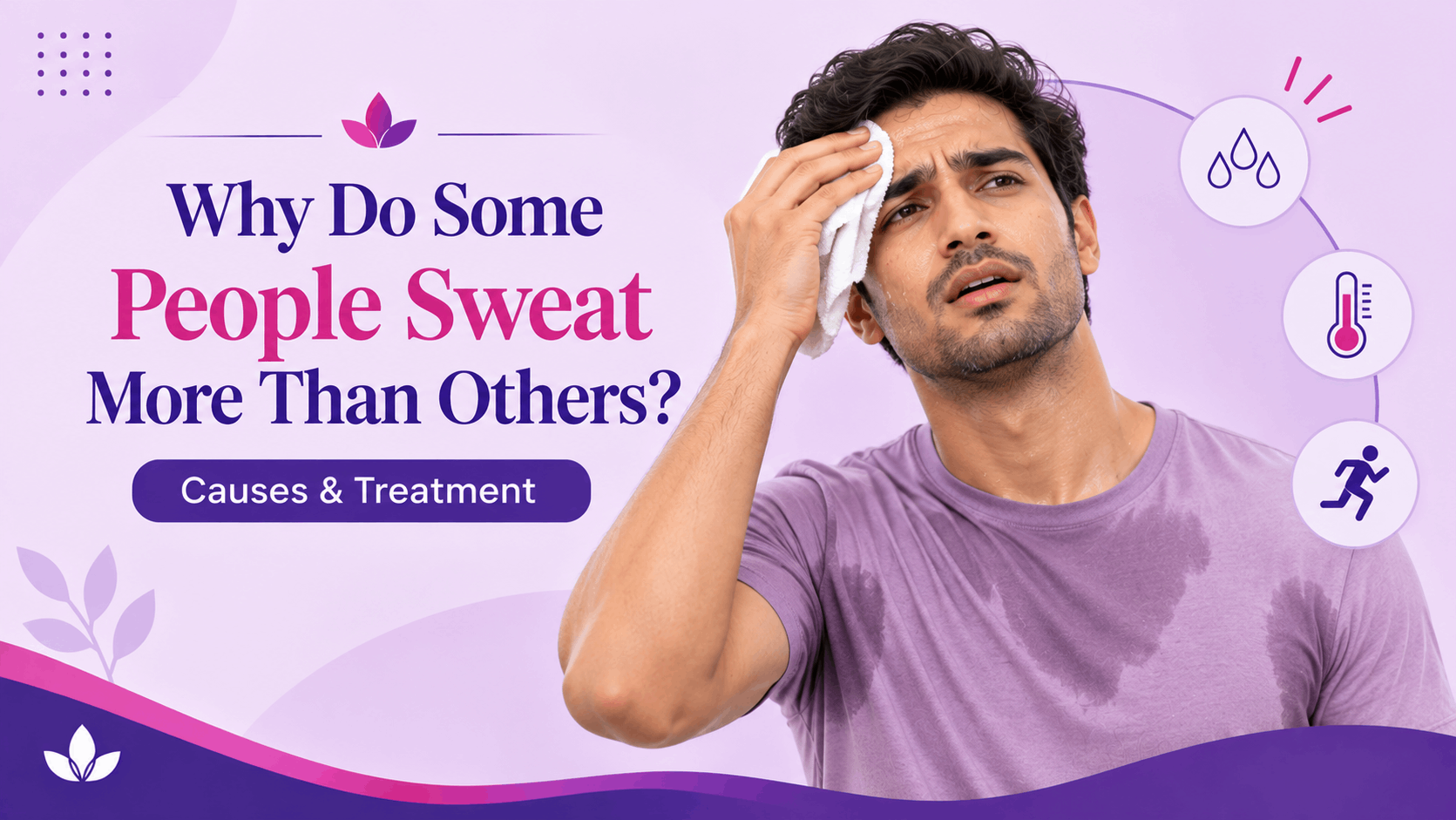
Sweating is a natural process that helps regulate body temperature and keep the body cool. However, the amount of sweat produced can vary significantly from person to person. While some individuals sweat only during physical activity or hot weather, others may experience excessive sweating even when they are resting or in a cool environment.
The difference in sweating patterns can be influenced by genetics, hormones, lifestyle, body composition, and certain medical conditions. Understanding these factors can help identify whether excessive sweating is a normal bodily response or something that needs medical attention.
What Determines How Much a Person Sweats?
Sweating is controlled by the nervous system, which activates sweat glands when the body needs to cool down. Several factors influence how much a person sweats.
1. Genetics
Genetics can influence the number, activity, and sensitivity of sweat glands. Some individuals naturally produce more sweat than others due to inherited characteristics.
2. Body Weight and Composition
Body weight and composition can influence sweating patterns. People with higher body weight may generate more body heat during physical activity, causing the body to produce additional sweat to regulate temperature.
3. Hormonal Changes
Hormonal fluctuations can affect the body’s temperature regulation. Puberty, pregnancy, menopause, and thyroid-related changes may contribute to increased sweating.
4. Physical Activity and Fitness Levels
People who exercise regularly may start sweating sooner during physical activity. This is often a normal adaptation that helps the body regulate temperature more efficiently.
5. Stress and Emotions
Stress, anxiety, and nervousness can activate the body’s sweat response. This may cause increased sweating, particularly on the palms, soles, face, and underarms.
6. Environmental Factors
Hot and humid weather, warm indoor environments, and heavy clothing can increase sweating. Humidity can also make sweat evaporate more slowly, making the skin feel wetter.
7. Medical Conditions and Medications
Certain health conditions, including thyroid disorders, diabetes, infections, and hormonal imbalances, may cause increased sweating. Some medications can also trigger excessive sweating as a side effect.
What Is Hyperhidrosis?
Hyperhidrosis is a condition characterised by excessive sweating beyond what is needed to regulate body temperature.
It can occur even when the weather is cool or the body is at rest.
There are two main types:
- Primary Hyperhidrosis: Excessive sweating without an identifiable underlying medical cause. It commonly affects the palms, soles, underarms, and face.
- Secondary Hyperhidrosis: Excessive sweating associated with an underlying medical condition or medication. It may affect larger areas of the body.
Hyperhidrosis can sometimes interfere with everyday activities, social interactions, and personal comfort.
Which Areas of the Body Are Commonly Affected?
Excessive sweating can affect different parts of the body, including:
- Underarms: Excessive sweating that may cause visible wet patches on clothing.
- Palms: Sweaty hands that can make everyday activities uncomfortable.
- Feet: Increased sweating that may contribute to odour and skin irritation.
- Face and Scalp: Sweating that may occur even without significant physical activity.
How Can Excessive Sweating Be Managed?
The right approach depends on the cause and severity of sweating. Some everyday measures may help manage mild sweating:
- Wear breathable fabrics such as cotton.
- Choose an antiperspirant suitable for your skin.
- Avoid personal triggers such as spicy foods and excess caffeine.
- Maintain good personal hygiene.
- Wear moisture-wicking socks and change them regularly.
- Keep your surroundings cool and well-ventilated.
If sweating is excessive or affects daily activities, a dermatologist can recommend suitable treatment options.
When Should You Consult a Dermatologist?
Excessive sweating may require medical attention if:
- It interferes with everyday activities.
- You sweat excessively even in cool environments.
- Sweating occurs during sleep.
- You experience sudden changes in sweating patterns.
- Sweating is accompanied by unexplained weight loss, fever, or other unusual symptoms.
Sudden sweating accompanied by chest pain, breathlessness, or faintness requires urgent medical attention.
Key Takeaway
Sweating is an essential body function, but excessive sweating can sometimes go beyond normal temperature regulation. Genetics, hormones, lifestyle, and underlying medical conditions can all influence individual sweating patterns.
If excessive sweating affects your comfort or daily routine, a dermatologist can help identify the possible cause and recommend suitable management options.
At Dr. Trasi’s La Piel Clinic, dermatological care focuses on understanding individual concerns and exploring appropriate treatment approaches for excessive sweating.
FAQs
1. Why do some people sweat more than others?
Sweating varies due to genetics, hormones, body composition, physical activity, environmental conditions, and medical factors.
2. Is sweating a lot always normal?
Not always. Excessive sweating without heat or physical activity may indicate hyperhidrosis or an underlying health condition.
3. Can genetics cause excessive sweating?
Yes. Genetics can influence sweat gland activity and make some individuals more prone to excessive sweating.
4. Does body weight affect sweating?
Yes. Higher body weight can contribute to increased heat production, causing the body to sweat more.
5. Can stress cause excessive sweating?
Yes. Stress and anxiety can activate sweat glands, particularly around the palms, feet, face, and underarms.
7. What is the difference between normal sweating and hyperhidrosis?
Normal sweating helps regulate body temperature, while hyperhidrosis involves excessive sweating beyond what the body needs for cooling.
8. Can excessive sweating be treated?
Yes. Treatment options depend on the type and severity of sweating and may include prescription antiperspirants, medications, or medical procedures.